Healthy Living Home Checks for a Warm Dry Home
A healthy living home is warm enough to use, dry enough to maintain, fresh enough after cooking or showering, and calm enough to notice problems before they become expensive. This New Zealand guide is for people in the Wellington Region and beyond who want simple first checks for comfort, moisture, indoor air quality, condensation and mould clues.
Healthy living at home is broader than formal Healthy Homes compliance. Tenancy Services describes the official Healthy Homes standards as minimum rental standards for heating, insulation, ventilation, moisture ingress and drainage, and draught stopping. A home can meet a minimum rule and still feel cold, damp, stale, strongly fragranced, or hard to maintain. This article is practical decision support, not formal certification, legal advice, medical advice, mould remediation, or building inspection.
Health New Zealand’s Healthy Homes Initiative uses a practical warm and dry frame, including support such as insulation, curtains, minor repairs, ventilation, heating sources, bedding, and power bill support for eligible whānau. That is a useful reminder: a healthy living home depends on building fabric, equipment, habits, affordability, and maintenance.
What a healthier home should feel like
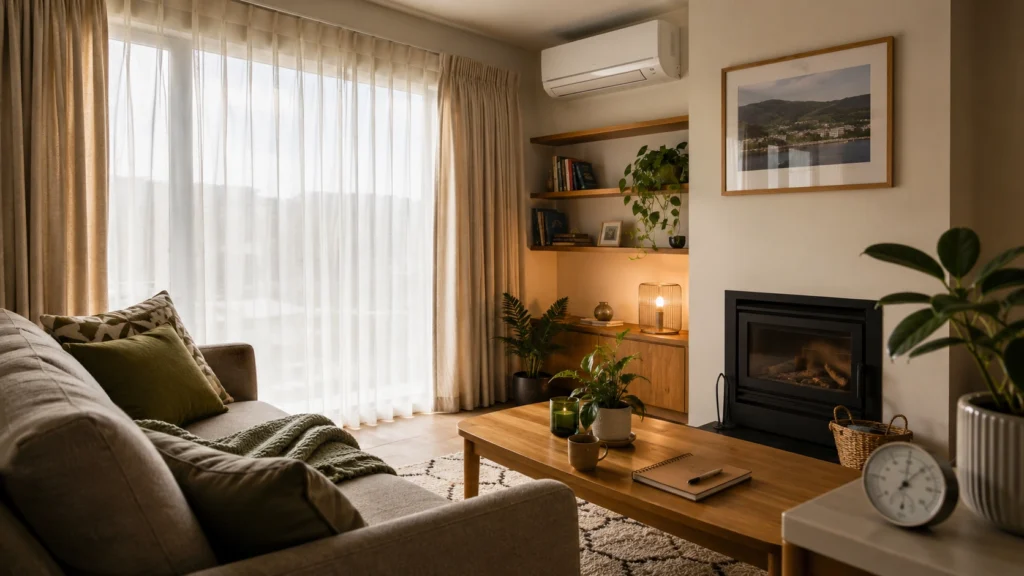
A healthier home usually feels steady rather than perfect. Main spaces are warm enough to use without heavy layers all day. Bedrooms do not feel sharply colder than the living room. Floors, windows, and outside walls do not constantly pull heat from the body. Air clears after cooking, showering, and sleeping. Damp smells do not return a day after cleaning. New paint, furniture, flooring, adhesives, fragrances, or cleaning products do not dominate the room.
The goal is not an extreme “non toxic” home or a renovation project. It is a home that is warm enough, dry enough, fresh enough, not overly chemical or fragranced, and easier to look after through ordinary routines.
Thermal Comfort Home Clues
Thermal comfort is warmth as people experience it. A thermometer helps, but comfort also depends on cold surfaces, draughts, uneven rooms, humidity, clothing, activity, and time spent in the space.
The World Health Organization notes that 18°C is widely accepted as a minimum indoor temperature in cold seasons, with higher temperatures likely needed for some vulnerable people (WHO Housing and Health Guidelines). Environmental Health Intelligence New Zealand also links cold homes below 18°C with increased respiratory and circulatory illness risk, dampness, and mould (EHINZ). These are reference points, not a full comfort plan.
Notice cold floors, cold window glass or frames, cold outside walls, draughts around doors or windows, rooms that cool quickly after heating, and condensation near cold surfaces. Also check whether curtains or blinds cover windows well, whether there are gaps at the top or sides, and whether heating seems to run often without making the room feel comfortable.
EECA’s Gen Less guidance highlights reducing draughts and managing window heat loss as practical steps for a warmer, more efficient home (EECA draught guidance; EECA window insulation guidance). Consider EWG’s Thermal Comfort Check when the main issue is cold rooms, uneven comfort, cold floors, draughts, poor curtains or blinds, heat loss clues, or winter comfort that feels hard to explain.
Moisture and ventilation clues
Everyday life adds moisture indoors. Cooking, showering, breathing, drying laundry, unflued gas heaters, damp subfloors, and leaks can all contribute. BRANZ notes that ventilation helps remove excess moisture and pollutants and replace indoor air with drier, fresher air; removing moist air can reduce damp and mould problems (BRANZ ventilation and moisture control).
Useful clues include steam that lingers after showering or cooking, wet windows most mornings, musty wardrobes, damp feeling bedding, towels that dry slowly, laundry dried indoors without good extraction or dehumidification, and fans that are noisy but do not clear moisture. EECA recommends reducing moisture at the source, opening doors and windows for short periods when conditions allow, using lids on pots, and making sure bathroom and kitchen fans are vented outside rather than into a ceiling space (EECA reduce dampness).
Open windows when outdoor conditions allow. Use fans during and after cooking or showering. Check whether a rangehood is ducted outside or only recirculates. When extraction has failed, ducting is disconnected, water is entering from outside, or drainage is poor, move from habit changes to supplier or professional help.
Condensation and mould clues
Condensation forms when moist air meets a cold surface. A little short term window condensation can happen in winter, but repeated wet glass, water on frames, wet curtains, or damp wall corners are clues to investigate. EHINZ notes that colder or poorly insulated homes are more likely to be damp because water condenses more easily on cold surfaces (EHINZ indoor environment).
Watch for musty smells, black spotting around windows, mould behind furniture, dampness behind curtains, swollen skirting, stained ceilings, or mould that returns after cleaning. BRANZ describes mould as a key indicator of poor indoor environmental quality (BRANZ mould and damp). The US EPA’s simple rule is useful: if mould is a problem, clean up the mould and eliminate the moisture source (US EPA mould guidance).
Seek professional help when mould is extensive, hidden, linked to leaks, recurring after cleaning, in porous materials, or associated with health symptoms. For symptoms or health concerns, contact a health professional.
Indoor Air Quality Home Choices
Low toxicity choices are best treated as careful reduction, not purity. Building Performance NZ notes that materials, furnishings, paints, glues, carpets, finishes, and household products can emit volatile organic compounds, or VOCs, into indoor air (Building Performance). The US EPA recommends increasing ventilation when using VOC emitting products, following label precautions, buying quantities that will be used soon, and avoiding unsafe mixing of household products (US EPA VOC guidance).
Choose low VOC paints and finishes where practical, especially for bedrooms and frequently used rooms. Ventilate during and after painting, new flooring, new cabinetry, new furniture, adhesives, sealants, or strong cleaning. Be cautious with “non toxic” claims, heavy fragrances, air fresheners, and products without clear labels. Sensitive people may need extra caution and medical advice.
Indoor air quality also includes cooking emissions, damp and mould related particles, dust, outdoor smoke, and poor outdoor air days. The US EPA says the most effective indoor air steps are source control and ventilation with clean outdoor air, with filtration as a useful supplement rather than a cure all (US EPA air cleaners guide). A correctly sized HEPA purifier can help with particles in a particular room, but it will not fix leaks, mould sources, or failed extraction.
6 Healthy Living Home Habits and First Checks
Use this first check list before spending money:
- Walk the home slowly. Note cold rooms, wet windows, musty smells, mould spots, draughts, and slow drying areas.
- Photograph patterns. Take photos of condensation, mould, damp corners, water stains, and fan or ducting issues.
- Write down timing. Record whether problems occur after rain, showers, cooking, laundry drying, cold nights, or when heating is off.
- Test one habit at a time. Use lids on pots, run fans longer, open windows briefly when weather allows, move furniture slightly away from cold outside walls, and dry laundry outside or with controlled ventilation where practical.
- Check equipment. Confirm whether fans work, filters are clean, ducts go outside, heaters are used effectively, and curtains or blinds close properly.
- Sort the likely pathway. Is the issue mainly habit, maintenance, building fabric, equipment, running cost, or professional level repair?
When EWG Can Help in the Wellington Region
Eco Wave Green can help turn healthy living home clues into a clearer first step pathway. If the problem is mainly cold rooms, draughts, cold floors, poor curtains, or uneven warmth, start with the Thermal Comfort Winter Check. If comfort overlaps with high running costs, equipment settings, inefficient heating, or larger upgrade decisions, use the Energy Check.
For wider moisture, ventilation, condensation and mould clues, read Indoor Environmental Quality. For rental compliance evidence, read Healthy Homes NZ and NZ Healthy Homes Standards 2026. Wellington Region readers can also contact EWG for practical next step clarity before larger upgrades, formal services, or specialist work.
When to Use a Professional
Use a qualified professional or official source when there are leaks, structural dampness, failed extraction fans, electrical or heating installation needs, extensive or hidden mould, building defects, consent questions, or symptoms needing medical advice. EWG’s role is practical decision support, not medical diagnosis, mould remediation, engineering certification, electrical work, building inspection, or formal Healthy Homes certification.
Calm conclusion
A healthy living home usually improves through observation, maintenance, healthy home habits, and targeted upgrades. Start with what you can see, smell, feel, photograph, and track. Then decide whether the next step is a simple household change, an EWG first step check, or a qualified professional.
Healthy Living Home Q&As
What is a healthy living home?
A healthy living home is a home that is warm enough, dry enough, fresh enough, and practical to maintain. It is not about perfection. It is about noticing comfort, moisture, ventilation, indoor air quality, condensation and mould clues early enough to choose the right next step.
Is a healthy living home the same as Healthy Homes compliance?
No. Healthy Homes compliance has a formal rental property meaning in New Zealand. A healthy living home is broader. It includes day to day comfort, moisture, indoor air quality, habits, affordability, maintenance, and when to use official sources or qualified professionals.
What should I check first in a cold or damp home?
Start with visible and repeatable clues: cold rooms, wet windows, musty smells, mould spots, draughts, slow drying areas, fan performance, heater use, curtains, and whether problems happen after rain, cooking, showering, laundry drying or cold nights.
When should I get professional help?
Use a qualified professional or official source when there are leaks, failed extraction fans, electrical or heating installation needs, structural dampness, extensive or hidden mould, building defects, consent questions, tenancy disputes, or health symptoms.