About Mike
Michal “Mike” Navratil
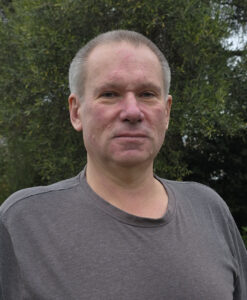 Mike Navratil is the founder and lead researcher behind Eco Wave Green Ltd. This About Mike page explains the background of Michal “Mike” Navratil and the research-led decision principles behind Eco Wave Green’s work.
His work focuses on practical decision support for energy use, building condition, healthier homes, thermal comfort, green infrastructure, ecology, climate adaptation, funding and public-value questions, mainly in a New Zealand and Australia context.
Eco Wave Green is not built around one product, one technology, or one fixed answer. It is built around a careful first step: understanding the situation before money, time, trust, supplier effort or public attention are committed.
The main question behind the work is simple: what should be understood first, what is worth checking next, who pays, and what should wait until the evidence is clearer?
About Mike’s current work
Mike’s current work at Eco Wave Green sits across three connected areas.
First, he develops research pages, evidence notes and public explanations that help readers understand energy, building condition, Healthy Homes readiness, thermal comfort, climate adaptation, ecology, funding and public-value decisions. Start with Eco Wave Green Research for the wider evidence layer.
Second, he helps shape practical first-step pathways such as Energy Savings, Business Energy Check, Healthy Homes and Thermal Comfort. These pathways are designed to clarify the site situation before larger audits, supplier quotes, equipment upgrades or installation work are considered.
Third, he works on safer decision structure: how to separate useful next steps from premature spending, vague sustainability claims, unsupported supplier promises or overcomplicated plans. The aim is not to make every issue look simple. The aim is to make the next decision clearer.
About Mike’s background: systems, evidence and local context
Mike’s interest in practical systems has roots in Zlín, Czech Republic – not simply as the birthplace of the Baťa company, but as an example of a city ecosystem where production, housing, education, healthcare, culture, urban planning and green space were developed together.
Under Tomáš Baťa’s leadership, Zlín became a modern industrial city with worker housing, schools, civic buildings, healthcare facilities, research institutes and cultural infrastructure. The city was also shaped by garden-city thinking, and Zlín is still described locally as a green city.
For Eco Wave Green, the useful lesson is not nostalgia and not a return to older methods. The value is pattern recognition: some system patterns remain useful when older paper-based routines are translated into modern tools, data systems, supplier networks, dashboards, AI-assisted workflows and practical decision rules.
In Zlín, many of these patterns were organised through people, buildings, routines, records and local responsibility. In modern environmental, building and digital work, similar logic can still matter: clear units of work, visible information, defined ownership, practical training, coordinated suppliers, feedback loops, maintenance discipline and honest limits.
Eco Wave Green uses this history as one research lens before recommending action. The same basic questions still matter:
What is the unit of work?
Who owns the next step?
What evidence is visible?
What is still unknown?
Who pays?
What health, environmental, financial, or trust risks could be created if the decision is rushed?
How Mike uses research and AI tools carefully
Mike uses structured research methods and AI-assisted workflows to organise information, compare options, and prepare clearer decision material.
AI tools are used as support tools, not as a substitute for judgement, source checking, professional responsibility, or site evidence. Important claims still need human review, practical boundaries, and direct checking before they are used publicly.
The goal is not automation for its own sake. The goal is clearer thinking, less confusion, and safer next-step decisions.
Where AI-assisted workflows are used, Eco Wave Green keeps human review, source checking, privacy care and practical accountability visible. For current public guidance, readers can also check New Zealand’s responsible AI guidance.
Working principles
Purpose before action
Every useful project starts by asking why the work matters and who the decision affects.
This prevents activity from becoming noise. Before a recommendation, checklist, supplier conversation, site review, or research page is useful, the purpose must be clear enough to guide the next step.
Evidence before solutions
Eco Wave Green does not start by pushing a technology, supplier, product, or upgrade.
The first step is to understand the situation. For energy decisions, that may mean bills, operating hours, equipment use, controls, comfort needs, tariffs, maintenance condition, and site context. For building-condition questions, it may mean warmth, moisture, ventilation, insulation, draughts, maintenance records, and practical evidence.
Better decisions usually come from clearer context, not from jumping straight to a solution.
Site context before supplier scope
Many practical decisions become risky when supplier conversations begin before the real issue is clear.
Eco Wave Green’s role is to help clarify the customer-side question first. That may point toward a supplier, specialist, formal audit, trade-qualified service, internal action, deferred action, or no further work for now.
This helps reduce the risk of premature spending and can help suppliers receive clearer, better-scoped enquiries when specialist work is genuinely needed.
Scope and payment before heavy diagnosis
Eco Wave Green keeps deeper diagnosis scoped and paid where practical review work is required.
Before a deeper review begins, the scope, deliverable, limits and payment point should be clear. This keeps the work fair, bounded and useful.
A first step should answer: what is being checked, what is excluded, what information is needed, what the customer receives, and what decision comes after the review.
Health, environment, and funding limits stay visible
A decision is not good just because it saves money.
Energy, building, and environmental decisions can affect comfort, health, maintenance, emissions, resilience, tenant experience, ecological outcomes, supplier work, and public trust.
Funding also matters. A pathway nobody can pay for is not a working pathway. Where funding, grants, vouchers, or support options may be relevant, they must be checked directly and never assumed.
What Eco Wave Green does not claim to do
Eco Wave Green does not replace qualified trades, engineers, auditors, inspectors, lawyers, medical professionals, tenancy advisers, or official government guidance.
Eco Wave Green does not guarantee energy savings, funding approval, supplier performance, compliance outcomes, certification, or project approval.
Where specialist, legal, technical, health, emergency, compliance, or trade-qualified work is needed, the right next step is to involve the appropriate qualified person or official source.
Why this matters
Many environmental and building decisions fail before the technical work begins.
The problem is often not lack of interest. It is unclear scope, weak evidence, poor timing, unfunded ambition, supplier confusion, or pressure to act before the site situation is understood.
Eco Wave Green exists to slow that process down just enough to make it safer.
The practical goal is clear:
better questions, better evidence, clearer next steps, and fewer avoidable mistakes.
Contact
Eco Wave Green is based in the Wellington region. Current practical service pathways are mainly Wellington and New Zealand focused, while the website also publishes research and decision-support material for wider New Zealand and Australia context.
For energy, building-condition, research, supplier or general enquiries, please use the Contact page and choose the enquiry type that best fits your situation.