Energy Savings
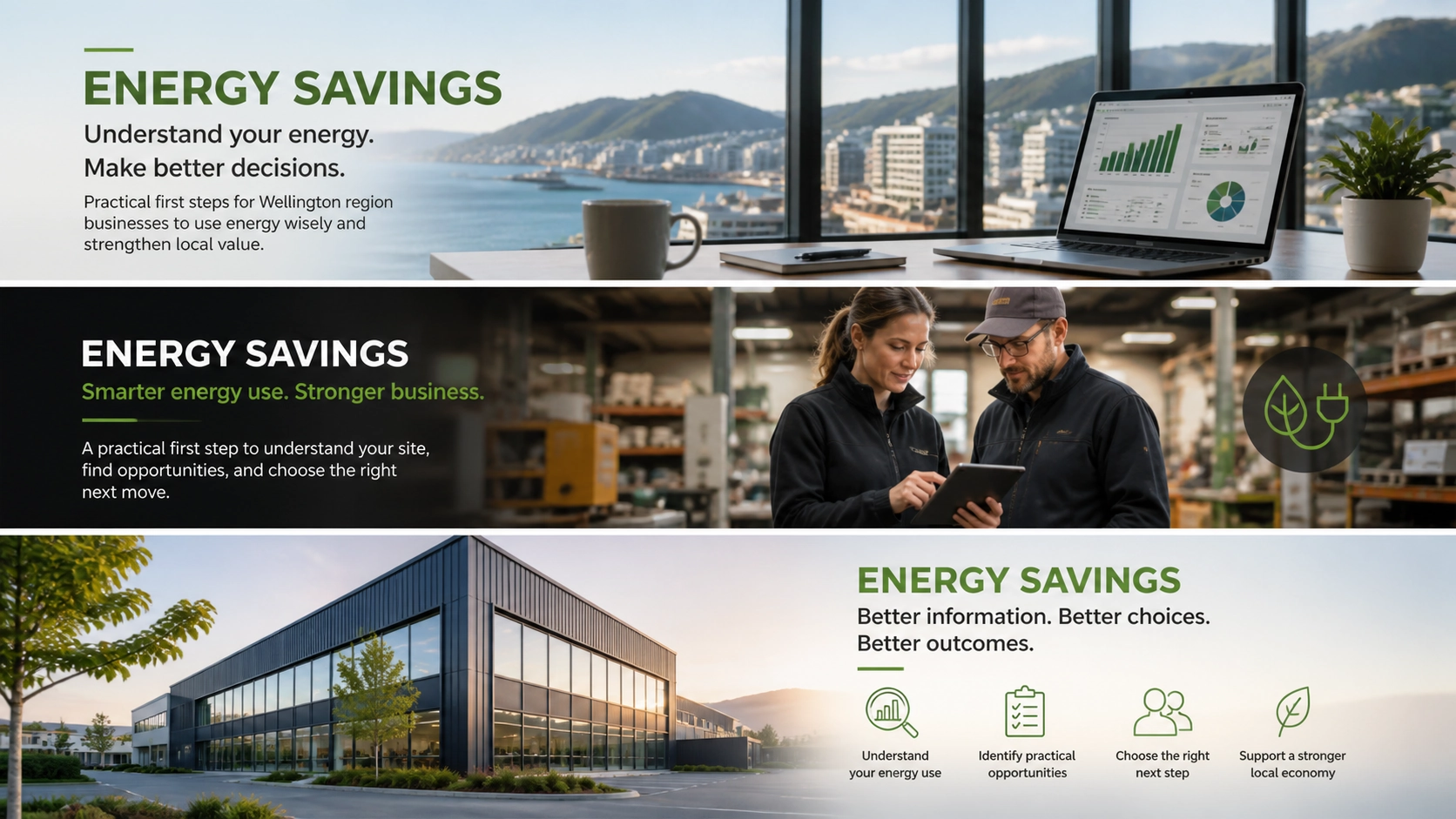
Energy savings for Wellington Region
Energy savings start with understanding how a site actually uses energy.
Eco Wave Green offers Wellington region businesses a practical first step for protecting operating value before larger energy audits, supplier quotes, equipment upgrades, or installation work are considered. Where avoidable waste, poor timing, or unclear operating patterns are present, money can leave the business and the local economy without doing useful work.
The aim is clearer decision making: what looks worth checking, what is better left alone, and when a supplier, specialist, or formal audit pathway is the right next step.
Start with site context
Good energy saving decisions are based on practical fit and likely effectiveness for the site. That means looking first at bills, operating hours, equipment, comfort needs, controls, maintenance, tariffs, and how the building is actually used.
The same action can be good value in one business and poor value in another. EWG clarifies the site context before larger spending is considered, so the next step is based on evidence rather than guesswork.
What affects business energy use
Business energy use is often shaped by many basic factors working together. A useful review looks at which ones matter for the specific site, and how they interact.
Common factors include:
– opening hours, setup time, closing routines, cleaning periods, and weekend use
– after hours load, standby equipment, overnight cycles, and security use
– electricity, gas, LPG, and relevant stationary backup generation
– heating, cooling, ventilation, extraction, zoning, set points, and overrides
– refrigeration, hot water, lighting, motors, pumps, fans, and compressors
– doors, loading areas, infiltration, thermal leakage, and building use mismatch
– controls, timers, sensors, thermostats, automation, and staff workarounds
– tariffs, billing patterns, meter data, demand timing, and peak use periods
– solar, batteries, generators, or other site energy interactions where relevant
– maintenance condition, equipment age, repair history, and replacement timing
– occupancy patterns, comfort expectations, staff routines, and customer activity
Some issues are simple to check. Others sit between building use, equipment, tariffs, comfort, maintenance, and supplier scope. EWG sorts which path fits the site: operational action, supplier advice, formal audit work, repair, installation, trade qualified support, or no further action.
How EWG approaches energy saving decisions
EWG uses a research informed and evidence aware approach. Instead of pushing a specific upgrade before the situation is understood, EWG looks for practical next step decisions.
A first review may point toward a simple operational change, better information from bills or meters, a supplier conversation, a formal audit or specialist review, deferred action until the case is clearer, or no further work for now.
This keeps the decision grounded in likely value, complexity, health, comfort, and environmental responsibility.
Business Energy Check
The Business Energy Check is EWG’s practical first step review for Wellington Region businesses that want clearer direction before larger energy audits, supplier quotes, equipment upgrades, or installation work.
It is designed to answer questions such as:
– Is there a visible reason energy use may be higher than expected?
– Could operating hours, controls, or after hours load be part of the issue?
– Are heating, cooling, ventilation, refrigeration, lighting, hot water, or controls creating avoidable waste?
– Is the next step likely to be a supplier, a formal audit, a simpler internal action, or no further work for now?
– Is there enough value or uncertainty to justify deeper investigation?
The paid step provides clearer diagnosis, practical priorities, and a short decision note before larger work is considered. Scope and payment are agreed before or at the start of the review.
If the review is not a fit, the fallback may be a smaller fit check, a DIY checklist, deferral, or no further action.
Ask about a Business Energy Check
Support, funding, and voucher awareness
EWG keeps an eye on relevant local authority, government, utility, funding, voucher, and innovation support pathways that may improve the business case for practical energy savings decisions. These opportunities can change, and eligibility is never assumed.
Where relevant, EWG can flag whether a support pathway is worth checking. This does not mean funding, voucher access, approval, or timing is guaranteed.
Useful public starting points include EECA business energy efficiency guidance, EECA support and funding information, and EECA energy audit information. These sources should be checked directly because eligibility, funding availability, thresholds, and application details can change.
Suppliers and specialists
Some business situations may need specialist advice, formal audit work, repairs, installation, or trade qualified services.
EWG clarifies the customer side issue before larger work is considered. If specialist work is needed, that work belongs with appropriately qualified third parties.
If a Wellington region supplier or specialist wants to share service scope, preferred work types, and areas served, they may contact EWG. This does not imply supplier approval, exclusivity, guaranteed work volume, or an existing supplier relationship.
Contact Eco Wave Green
Eco Wave Green Limited is a New Zealand business operating in the Wellington region. Site visits and review scope are by arrangement.
Healthy Homes
Energy Savings QA
What is Eco Wave Green’s Energy Savings programme?
Eco Wave Green’s Energy Savings programme helps Wellington Region businesses start with practical site context before larger audits, supplier quotes, equipment upgrades, or installation work are considered. The first step is to clarify likely waste, operating patterns, comfort needs, controls, and possible next actions.
What does the Business Energy Check look at first?
The Business Energy Check starts with the site situation: bills, operating hours, after-hours load, equipment, controls, comfort needs, maintenance, tariffs, and how the building is actually used.
Can EWG guarantee energy savings or funding?
No. EWG does not guarantee energy savings, funding, voucher access, approval, or timing. Any savings estimate should be based on site data, operating patterns, tariffs, equipment, maintenance condition, controls, and realistic implementation choices.
Does EWG replace an auditor, electrician, installer, or specialist?
No. EWG helps clarify the customer side issue and the likely next step. Formal audits, engineering advice, electrical work, gas fitting, installation, compliance certification, and emergency repairs should be carried out by appropriately qualified third parties.
How can a Wellington Region business start?
Use the Contact page and include “Business Energy Check” in the subject line. Add the business type, site location, main concern, and whether you have recent energy bills, meter data, or supplier information available.