Indoor Environmental Quality
Indoor Environmental Quality: Thermal Comfort, Moisture, Ventilation, and First Checks
Indoor environmental quality, or IEQ, is the practical condition of the spaces people live in. It includes thermal comfort, moisture, ventilation, condensation, mould clues, dust, cooking emissions, outdoor smoke, material emissions, and how easy the home is to maintain. This page focuses on warmth, dryness, fresh air, low toxicity choices, and first checks.
This is practical decision support, not medical advice, legal advice, engineering certification, mould remediation, electrical work, building inspection, or formal Healthy Homes certification. EWG can help people organise visible clues and prepare sensible next step questions before larger spending or specialist services.
For a broader homeowner friendly overview, see Healthy Living at Home. For rental specific obligations and evidence, use Healthy Homes NZ or NZ Healthy Homes Standards 2026.
Boundary from formal Healthy Homes compliance
Healthy Living / indoor environmental quality is broader than formal Healthy Homes compliance. Tenancy Services defines the Healthy Homes standards as minimum rental standards for heating, insulation, ventilation, moisture ingress and drainage, and draught stopping (Tenancy Services). Compliance and lived comfort overlap, but they are not identical. A rental may meet minimum requirements and still have cold bedrooms, uneven comfort, stale air, condensation patterns, or material emission concerns. Non rental homeowners can benefit from the same first checks.
Technical table: indoor condition signals
| Signal | Possible cause | First check | EWG pathway | Escalate when |
|---|---|---|---|---|
| Room cools quickly after heating | Heat loss through windows, ceiling, floor, walls, gaps, or poor zoning | Compare room feel before/after heating; check curtains, draughts, exposed floors, cold surfaces | Thermal Comfort Check | Insulation is wet, inaccessible, damaged, or part of building work |
| Cold floor or ankle level chill | Underfloor heat loss, gaps, subfloor air movement, floor coverings, unheated room below | Check underfloor access if safe; note worst rooms and times | Thermal Comfort Check | Subfloor dampness, rot, pests, or structural issues are suspected |
| Persistent window condensation | High indoor moisture plus cold glass/frames; limited ventilation; low surface temperature | Record when it appears and clears; note heating, showering, cooking, laundry | Thermal Comfort Check or practical first step screen | Water runs into frames, wall linings are wet, or mould returns |
| Musty smell in wardrobe/corner | Moisture, low airflow, cold external wall, leak, damp subfloor, stored damp items | Move furniture slightly from walls; photograph and smell check after rain | Practical first step screen | Smell is strong, hidden, or linked to visible dampness |
| Bathroom fan noisy but steam lingers | Low flow, dirty grille, failed motor, poor ducting, no outside discharge | Hold tissue near fan, inspect visible grille, confirm discharge point if known | Practical screen then supplier | Fan repair, electrical work, ducting, or roof/wall penetration is needed |
| Cooking odours and haze linger | No rangehood, recirculating rangehood, poor capture, dirty filters, poor airflow | Check whether hood ducts outside; use during and after cooking | Energy Check if equipment decisions overlap; supplier if repair needed | Gas appliance issues, combustion concerns, or installation work is needed |
| Mould returns after cleaning | Moisture source remains; cold surface; leak; hidden damp; poor ventilation | Photograph, clean safely if minor, record recurrence time | Practical first step screen | Extensive, hidden, recurring, or health linked mould is present |
| Strong new material smell | VOCs from paint, flooring, furniture, adhesives, sealants, cleaning products | Check labels; ventilate; remove or isolate source if possible | Practical first step screen | Symptoms occur, product safety advice is unclear, or exposure is unavoidable |
| High running cost plus poor comfort | Inefficient equipment, operating pattern, heat loss, controls, poor zoning | Compare bills, settings, hours of use, and room comfort | Energy Check | Electrical, heat pump, or ventilation installation work is needed |
Thermal comfort
Thermal comfort is not only air temperature. People also feel radiant temperature from cold windows and walls, ankle level draughts, cold floors, humidity, clothing, activity, and the amount of time spent in the room. A wall thermostat may read acceptably while the person sitting near a cold window still feels chilled.
The World Health Organization notes that 18°C is widely accepted as a minimum indoor temperature in cold seasons, while higher temperatures may be needed for older people, children, and people with chronic illness (WHO Housing and Health Guidelines). EHINZ reports that cold homes below 18°C are linked with increased risks of respiratory and circulatory illness, dampness, and mould (EHINZ home heating). These references are not a full diagnosis, but they help frame repeated cold room observations.
Look for heat loss routes: single glazing, aluminium frames, poor curtain fit, missing pelmets, gaps around doors and windows, uninsulated floors, ceiling insulation defects, cold external walls, and rooms above garages or exposed subfloors. EECA describes draught reduction as keeping the home as airtight as practical while maintaining controlled ventilation (EECA draughts). EWG’s Thermal Comfort Winter Check is suited to cold rooms, draught and heat-loss clues, room-by-room variation, ineffective heating, curtain or blind questions, and first-step upgrade prioritisation.
Moisture and ventilation
Moisture load comes from people and building sources: showers, cooking, breathing, drying laundry, unflued gas heating, damp subfloors, rainwater faults, leaks, and wet materials. BRANZ states that ventilation removes excess moisture and pollutants such as carbon dioxide and replaces indoor air with dry, fresh air; removing moist air can reduce damp and mould problems (BRANZ ventilation and moisture control).
Extraction and recirculation are different. Bathroom fans and kitchen rangehoods are most useful for moisture control when they remove air to the outside. A recirculating rangehood may filter some grease or odour, but it sends air back to the kitchen. Washington State Department of Health notes that recirculating hoods are generally much less effective than ducted hoods at removing cooking pollution, and kitchen exhaust should be ducted outside rather than into an attic or crawlspace (Washington State DOH).
Window opening can help when outdoor conditions allow, but it has limits in cold, wet, windy, smoky, high pollen, or security sensitive conditions. EECA recommends reducing moisture at the source, airing the home for short periods, using lids on pots, and making sure fans are properly sized, cleaned, and vented outside (EECA reduce dampness).
Condensation and mould
Condensation occurs when moist air meets a cold surface and drops below dew point. Cold windows, frames, external walls, uninsulated corners, and stagnant spaces behind furniture or curtains are common first places to notice it. EHINZ notes that colder or poorly insulated homes are more likely to be damp because water condenses more easily on cold surfaces, and damp homes can lead to mould growth (EHINZ indoor environment).
Recurring mould should be treated as a clue, not only a cleaning issue. BRANZ describes mould as a key indicator of poor indoor environmental quality (BRANZ mould and damp). WHO’s dampness and mould guideline says the most important way to avoid adverse health effects is to prevent or minimise persistent dampness and microbial growth on interior surfaces and in building structures (WHO dampness and mould). The US EPA’s practical framing is similar: clean up mould and eliminate the moisture source (US EPA mould).
Escalate when mould is extensive, hidden, recurring after cleaning, linked to leaks, in porous materials, or associated with symptoms. For symptoms, use medical advice. For leaks, structure, drainage, cladding, roof, plumbing, electrical, or remediation questions, use qualified professionals.
Indoor air quality
Indoor air quality is shaped by source control, ventilation, filtration, and cleaning. Sources include cooking emissions, damp and mould related particles, dust, pets, smoke, outdoor poor air days, stored chemicals, cleaning products, building materials, furnishings, and combustion appliances. Building Performance NZ notes that indoor air can be affected by building materials, paint, glues, carpets, finishes, furnishings, dampness, mould, and dust mites (Building Performance — managing pollution and unhealthy air).
The US EPA says the most effective ways to improve indoor air are to reduce or remove pollutant sources and ventilate with clean outdoor air; filtration can supplement source control and ventilation, but portable air cleaners cannot remove all pollutants (US EPA air cleaners). A properly selected HEPA purifier can be useful for particles in a defined room, especially during smoke or poor outdoor air days. It is not a universal cure and will not solve a moisture source, leak, failed fan, or mould growth. Avoid ozone producing air cleaners.
Low toxicity materials and finishes
VOCs are chemicals that become airborne at room temperature. Building Performance NZ identifies VOCs from materials, furnishings, paints, carpet products, synthetic foams, and finishes as a major source of indoor air pollution (Building Performance – materials inside your home). The US EPA recommends increasing ventilation when using VOC emitting products, following label precautions, buying only quantities that will be used soon, and not mixing household products unless directed on the label (US EPA VOCs).
Use cautious language. “Low VOC” is more useful than “non toxic,” but labels and safety data still need checking. New paint, flooring, cabinetry, adhesives, sealants, mattresses, furniture, fragrances, and cleaning products may need extra ventilation and time. Sensitive people may need additional caution and health advice.
Habits, monitoring, and first checks
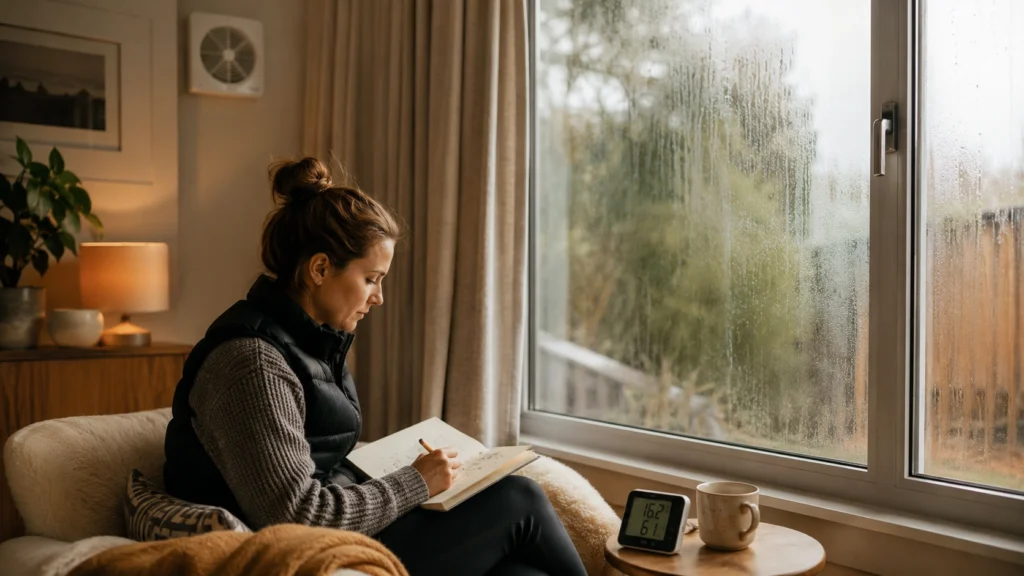
Low cost checks can make a vague complaint clearer. Use a small thermometer/hygrometer where practical, but interpret numbers with visible clues. Record temperatures, humidity, condensation timing, heating use, fan use, smells, photos, and weather. Keep a short seasonal note: what happens during cold snaps, after rain, after showers, after cooking, when laundry dries inside, and when rooms are closed up overnight.
A photo log is useful because condensation and mould can disappear before help arrives. Include wide room photos and close ups. Note whether the problem is limited to one room, one wall, one season, one activity, or one piece of equipment.
Technical table: practical first check toolkit
| Tool/check | What it helps reveal | Cost/effort level | Limitations | Next step |
|---|---|---|---|---|
| Room by room walk through | Cold zones, smells, wet areas, draught clues, equipment issues | Free / low | Subjective; depends on weather and timing | Repeat during cold/wet conditions; photograph patterns |
| Thermometer/hygrometer | Temperature and humidity trends | Low | Placement matters; cheap units vary | Log readings with time, room, activity, and weather |
| Condensation log | Moisture and cold surface pattern | Free | Does not prove cause | Compare with cooking, showering, laundry, heating, outdoor conditions |
| Fan tissue test | Whether a fan appears to draw air | Free | Does not measure flow or duct discharge | Clean grille; check outside outlet; call supplier if weak/failed |
| Rangehood duct check | Whether cooking air leaves the building | Low | Access may be limited | Use ducted extraction where possible; seek installer advice |
| Curtain/blind check | Window heat loss and draught management clues | Free / low | Does not measure insulation value | Improve fit, close gaps, consider pelmets or thermal options |
| Photo log | Recurrence, location, and severity over time | Free | Needs consistent timing | Use for EWG screen or professional preparation |
| Bill and settings review | Comfort/running cost overlap | Low | Bills do not show room comfort by themselves | EWG Energy Check if equipment, cost, or upgrade decisions matter |
EWG decision pathway
Use EWG’s Thermal Comfort Check when the problem is cold rooms, cold floors, draughts, cold windows, heat loss clues, ineffective heating, poor curtain/blind performance, insulation clues, or winter comfort. Use EWG’s Business Energy Check when comfort overlaps with running cost, inefficient operation, controls, equipment settings, or larger upgrade decisions. Use a practical first step screen where the issue is mixed and the main need is a clearer observation summary before contacting suppliers.
Use suppliers or qualified professionals for leaks, extraction fan installation or repair, electrical work, heat pump installation, plumbing, drainage, structural dampness, building defects, specialist mould remediation, consent, engineering, or health symptoms. EWG may help prepare questions and organise observations, but the specialist performs the specialist work.
Q&A
Is Indoor Environmental Quality the same as Healthy Homes compliance?
No. Indoor Environmental Quality is broader than formal rental compliance. This page is about practical lived conditions, first checks, comfort, moisture, ventilation, indoor air quality, and when to use official or professional help.
Can a compliant home still feel unhealthy or uncomfortable?
Yes. Minimum rules and lived comfort overlap, but a home may still have cold spots, poor habits, equipment problems, material odours, or maintenance issues.
Does condensation always mean a building defect?
No. Condensation can come from ordinary moisture meeting cold surfaces. Escalate when it is persistent, damaging materials, linked to leaks, or followed by recurring mould.
Are low VOC paints enough to fix indoor air quality?
No. Low VOC choices reduce one source. Ventilation, moisture, cooking, cleaning products, dust, furnishings, smoke, and source control still matter.
Do indoor plants solve air quality problems?
No. Plants can be pleasant, but the US EPA says there is no evidence that a reasonable number of houseplants removes significant pollutant quantities in homes and offices (US EPA improving indoor air quality).
When should I use an air purifier?
Use a correctly sized HEPA purifier for particles in a specific room, especially during smoke or poor outdoor air days. It should not replace source control, ventilation, leak repair, or mould prevention.
When should I call a professional instead of trying DIY?
Call a professional for leaks, electrical work, failed extraction, heating installation, structural dampness, extensive or hidden mould, recurring mould, building defects, consent or engineering questions, and health symptoms.
Conclusion
Indoor environmental quality improves when people observe early, record patterns, and separate habit changes from maintenance, equipment, building fabric, and professional level issues. EWG’s role is first step clarity: what appears to be happening, what evidence is useful, what can be tested simply, and which pathway makes sense before bigger spending. For a Wellington Region first step enquiry about comfort, moisture, ventilation, or energy use clues, contact Eco Wave Green with room photos, condensation timing, heating notes, fan details, and any known rental-compliance evidence.