
Net Zero Districts Hub Electrification, on‑site storage, and AI micro grids now let whole neighborhoods slash carbon without sacrificing comfort. Net Zero Districts bundle these levers under rating tools such as Green Star Communities v2, while new AU / NZ codes ban fossil‑fuel infrastructure in most builds. Consequently, councils can aim for an audited 57 % emissions cut by 2030 and deliver resilient precincts that withstand outages, price shocks, and climate risk. The guide below maps scope, policy, frameworks, and next steps so every project team can act with confidence.
Net Zero Districts Hub, what it covers
Firstly, Electrification mandates force gas‑free design through NCC 2025, Victoria’s 2024 regulations, the ACT connection ban, and NZ’s Building for Climate Change trajectory. National Construction CodeEnergyClimate ChoicesMBIE
Secondly, On‑site storage spans community batteries, district BESS, vehicle‑to‑grid hubs, and hydrogen hybrids. DCCEEWMeridian EnergyWestern Australian Government
Thirdly, AI microgrid controls optimise solar, storage, HVAC, and EV chargers for peak‑shaving and resilience. TIMEUN SDSN Files
Fourthly, Rating tools—Green Star Buildings, NABERS Thermal Comfort, and Green Star Communities—verify true zero‑carbon outcomes. Green Building Council of AustraliaNABERS
Finally, Contract clauses and sandboxes lock electrification into tenders and let teams test designs virtually. DCCEEW
Why it matters
- Wellington targets a 57 % emissions drop by 2030, en‑route to net zero 2050. Wellington City Council
- Australia funded 318 community batteries with AU$124.7 m; Round 2 adds 46 m more. DCCEEW
- Ruakākā’s 100 MW / 200 MWh BESS can power 60 000 homes for two winter hours. Meridian Energy
- WA’s Denham hydrogen microgrid offsets 140 000 L diesel yearly. Western Australian Government
- BrainBox AI cut HVAC energy 15.8 %, saving 37 t CO₂ in one office. TIME
Thus, districts enjoy smaller bills, cleaner air, stronger grids, and documented climate progress.
Policy & Market Drivers
Moreover, NCC 2025 labels new commercial builds “net‑zero ready,” bundling solar‑ready roofs, tight envelopes, and electric services. National Construction Code
Meanwhile, Victoria requires all‑electric permits for new homes from January 2024 and most commercial builds from 2027. Energy
Likewise, the ACT blocks new gas connections after March 2024. Climate Choices
Across the Tasman, MBIE will phase operational‑carbon caps until final limits in 2035. MBIE
Simultaneously, Green Star Buildings grants 6‑Star only to fossil‑fuel‑free, renewables‑powered assets; all new 5‑Star projects must follow its Climate Positive Pathway by 2023. Green Building Council of Australia
Additionally, NABERS Indoor Environment scores thermal comfort, ensuring electrified HVAC keeps occupants healthy. NABERS
Therefore, regulation and market pull now align, accelerating zero‑carbon precinct demand.
Practical Frameworks
Precinct energy‑model sandbox
Furthermore, open‑source simulators from NREL and EnergyLab let planners trial solar‑plus‑storage blends before build‑out, de‑risking capital.
AI‑Ops checklist
Consequently, GBCA and IEA guidance demands data‑quality gates, explainable algorithms, cyber audits, and human‑override drills for every smart precinct. TIME
Procurement clause library
DCCEEW’s July 2024 model clauses embed a Supplier Environmental Sustainability Plan in all AU>$7.5 m contracts, making electrification non‑negotiable. DCCEEW
Together, these tools convert lofty goals into actionable specs, schedules, and KPIs.
Net Zero Districts Hub next steps & EcoWave role
EcoWave .Green transforms mandates into milestones. Specifically, we baseline loads, run sandbox scenarios, craft AI‑Ops playbooks, and weave electrification clauses through every RFP. Additionally, we convene peer‑learning circles so councils replicate wins—such as Monash’s campus microgrid that eases network strain during peaks. UN SDSN Files
Contact us to script, fund, and launch your Net Zero Districts roadmap today.
Explore our other cornerstone hubs
Read More:
Green Infrastructure and Strategy >>>
Policy Funding Levers >>>
Life Cycle Economics >>>
Research Hub >>>
Storm Water Urban Heat >>>
Expore our otherer posts

Institutional Researches Sustainable Development
Institutions in Bloom: How Research Powers Sustainable Urban Development Institutional Researches Sustainable Development is no longer specifically academic jargon; it guides the parks we jog
Healthy Living Home: 6 Easy Checks for NZ Homes
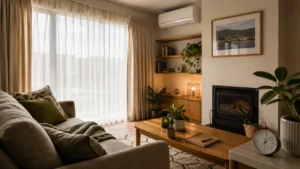
Healthy Living Home Checks for a Warm Dry Home A healthy living home is warm enough to use, dry enough to maintain, fresh enough after
Automation Sustainable Urban Development
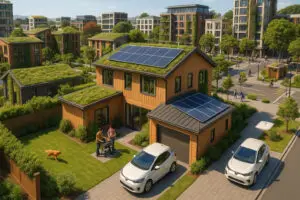
Cities That Learn: How Automation Sustainable Urban Development Brings Nature Back In short, Automation Sustainable Urban Development is no longer consequently a distant dream. Around
Q: What defines a net‑zero precinct?
A: A net-zero precinct is, in essence, a district specifically designed to balance its overall energy use. This is achieved by integrating renewable energy sources, electrification, energy storage, and demand-shifting strategies into the core of its infrastructure.
Q: Which AU/NZ standards apply?
A: To ensure consistency and performance, two key standards apply. Firstly, Green Star Communities v2 provides a comprehensive framework for sustainable design. Additionally, NABERS precinct benchmarks guide emissions reduction and energy resilience metrics across the region.
Q: How can councils start planning one?
A: Councils can begin by exploring the planning tools available in EcoWave’s hub. Next, it’s advisable to pilot small-scale precincts to test concepts. Afterward, benchmarking progress using relevant case studies will provide real-world insights. Finally, councils should apply for local grants to support implementation and scale.