Institutional Researches Development Tech
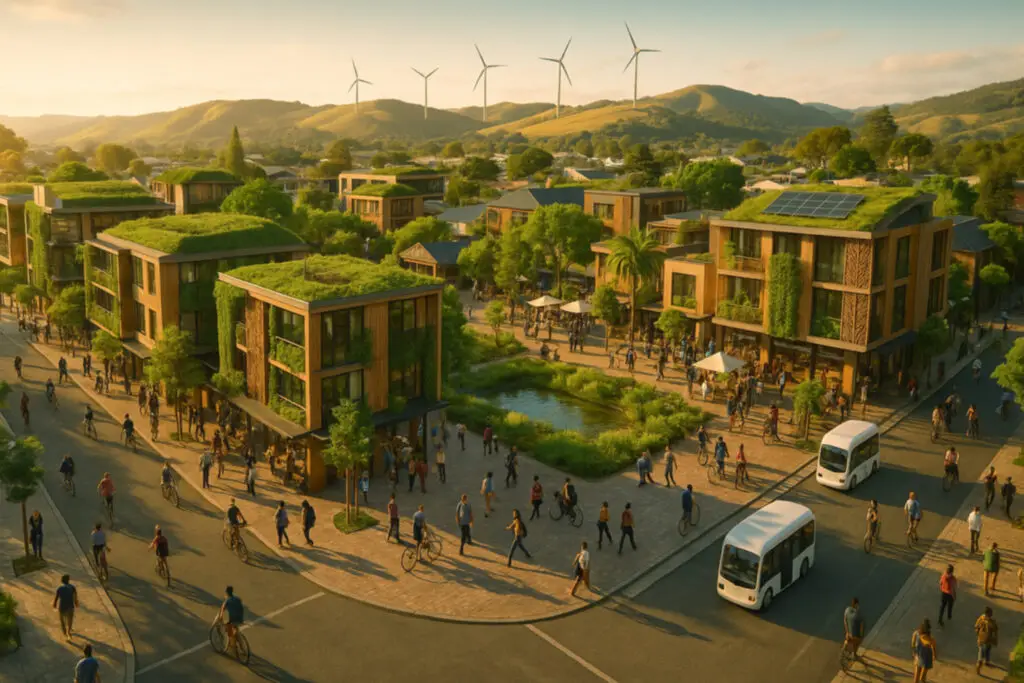
Institutional Researches Development Tech, Sustainable Urban Development explores how governments, councils, universities, and NGOs create the policies, funding streams, and legal frameworks that turn green city visions into reality.
Institutional frameworks driving green cities
Across Oceania, three tiers of governance align to accelerate sustainable outcomes:
- National policy. Australia is drafting a National Urban Policy that synchronizes climate targets with city planning, while New Zealand’s National Policy Statement on Urban Development guides compact, low carbon growth.
- Local regulation. Wellington’s strict green building codes and Auckland’s Unitary Plan embed energy performance, transit integration, and biodiversity into planning approvals.
- Research & civil society. Symposium such as “Urban Forest Futures” convene scientists, iwi representatives, and planners to co design urban nature strategies.
These governance layers produce quantifiable impact. Green construction jobs in Australia and New Zealand have grown 23 % since 2015, adding 50 000 positions and confirming the economic value of institutional leadership.
Financing & technology innovations (2024–2025) Institutional Researches Development
Institutions are pairing novel finance with smart city tools:
- Green capital. Wellington’s environmental impact bonds fund coastal resilience, while Sydney offers density bonuses for vegetated facades that reduce urban heat stress.
- Smart optimization. Cities integrate AI traffic systems Seattle’s Project Green Light cut idling emissions by 10 % and open data hackathons that crowd solve waste or transit bottlenecks.
- International support. The World Bank now invests about US$5 billion a year in sustainable urban programmes, helping cities finance low carbon transport and inclusive housing.
This blend of finance and tech embeds sustainability into everyday urban operations while attracting private sector participation.
Institutional Researches Development Challenges and adaptive solutions
Bureaucratic inertia, upfront costs, and community push back can impede progress. Effective counter measures include:
- Streamlined governance. Multi level compacts e.g., the Montreal Call to Action on Cities align local and national climate targets beyond election cycles.
- Unified standards. Harmonized green building codes eliminate compliance confusion and accelerate permitting.
- Innovative finance. Green bonds, PPPs, and land value capture distribute capital costs and incentive developers.
- Deep engagement. Co design workshops, participatory budgeting, and transparent data portals build public trust and reduce resistance.
The result is an adaptive institutional ecosystem capable of overcoming traditional barriers and delivering measurable environmental, social, and economic benefits.
Next steps Institutional Researches Development
For practitioners, the priority is to replicate these aligned policy finance technology models, tailor them to local contexts, and document results for peer learning.
Technical
Sustainable Social Economic Tech
Sustainable Social Economic offer urban practitioners a framework that integrates economic activity although with social equity and ecological limits. By valuing social, human and natural

Green Infrastructure Sustainable Cities – Tech
Green Infrastructure Sustainable Cities: Key Benefits Weaves living systems rooftops planted with sedums, tree lined streets, rain absorbing soils into urban fabric, replacing or complementing
Q: What governance layers drive green city progress in Australia and New Zealand?
A: Green city progress in both countries is propelled by a combination of governance layers that operate in sync. At the national level, climate aligned policies set broad direction. These are complemented by local green building regulations that ensure implementation on the ground. Additionally, ongoing collaboration between research institutions and civil society helps bridge innovation and public accountability, reinforcing the overall momentum.
Q: How do green bonds support tech driven urban projects?
A: Green bonds play a pivotal role by channeling private sector capital directly into public infrastructure. As a result, they help reduce the cost of borrowing for local governments. At the same time, these funds enable the deployment of smart city technologies, accelerating sustainable upgrades and innovation in urban environments.
Q: What is the first step councils should take to align policy and technology?
A: The essential starting point is to establish a multi level compact that clearly connects municipal goals with national climate targets. This alignment ensures that local strategies are supported by broader funding mechanisms and policy frameworks, thereby creating a coherent pathway for integrating technology into sustainable governance.
Read More:
Institutional Researches Development FAQ >>>
Institutional Researches Development >>>
Policy Funding Levers >>>
Automation Tech in Sustainability >>>
Net-Zero Precinct Analysis >>>