Ecology Policy Radar: wider than carbon
Ecology policy radar is a simple way to track New Zealand environmental pressures beyond carbon. Carbon still matters: emissions targets, energy transition and low carbon investment remain important. But they are not the whole ecological agenda. New Zealand also has to deal with water quality, groundwater, wastewater, stormwater, biodiversity decline, land use pressure, waste systems, product stewardship, contaminated sites and the practical limits of local infrastructure.
A useful radar does not pretend every environmental issue is equally urgent. It separates what is already in force, what is proposed, what is under consultation, what is only an international signal and what needs monitoring before it becomes a direct decision problem.
For councils, regional authorities, institutions, businesses, landowners, producers, importers and funders, ecological issues can turn into planning conditions, monitoring requirements, infrastructure costs, consent risks, remediation liabilities, procurement expectations or public-health constraints.
Why this matters now in New Zealand and Wellington Region
New Zealand’s current environmental direction is not static. Official environmental reporting continues to show pressure across land, freshwater, groundwater, coasts, and marine systems. Our Freshwater 2026 highlights groundwater, freshwater quality, land use effects, contaminants, and long lag times between land activity and water outcomes: Our Freshwater 2026.
Policy status is also moving. New Zealand’s first national wastewater environmental performance standards became law on 19 December 2025, although overflow and bypass requirements take effect three years later: Taumata Arowai wastewater standards. The Planning Bill and Natural Environment Bill were introduced on 9 December 2025 but are not yet final law, so they should be treated as bills before Parliament rather than settled obligations: Planning Bill and Natural Environment Bill.
For the detailed technical tables behind this plain English post, see Eco Wave Green’s ecology pressure radar.
This is the practical point: ecological policy is becoming a decision system, not just a values statement.
Pain 1: water and catchments
Water is the first priority because it connects ecology, infrastructure, land use, public health, and funding.
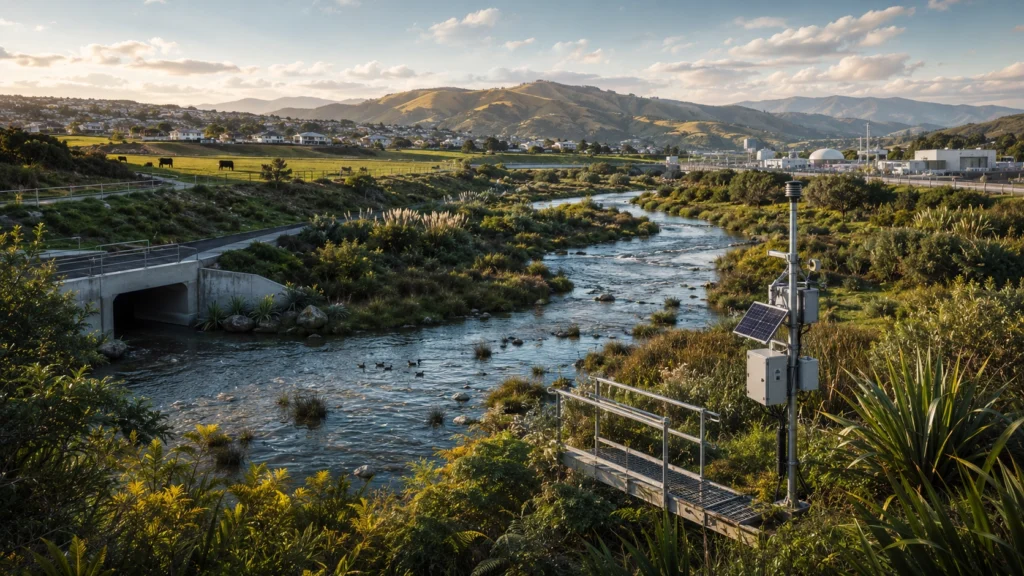
Freshwater problems are often discussed as river or lake problems, but the real system is wider. Groundwater, rivers, wetlands, estuaries, harbors, wastewater discharges, stormwater, land use practices, drinking water sources, and coastal receiving environments are linked. A land use decision in one part of a catchment may affect water years later. A wastewater network decision may affect a river or harbor. A stormwater system may carry sediment, metals, pathogens, chemicals, or other contaminants into receiving environments.
For councils and regional authorities, decisions must connect catchment evidence, infrastructure condition, consent requirements, source water risk, public health protection, and affordability. The payer is often unclear or politically difficult: ratepayers, councils, developers, landowners, water service operators, central government, or a mix of funders may all be involved.
The safe learning priority is water as a connected catchment, infrastructure, contaminant, ecological, public health, and funding problem.
Pain 2: land use and biodiversity under changing rules
The second priority is the collision between land use and biodiversity under a moving planning system.
The National Policy Statement for Indigenous Biodiversity was gazetted in July 2023 and amended in 2024 and 2025: NPSIB. Meanwhile, the wider planning system is being redesigned through the Planning Bill and Natural Environment Bill.
This creates transition risk. Councils, landowners, developers, infrastructure providers, iwi and hapū, environmental managers, and funders may all need decisions before the full future system is settled. Biodiversity protection, housing, infrastructure, productive land, forestry, agriculture, wetlands, freshwater, erosion, sediment, and sites of significance can pull in different directions.
The important discipline is status separation. Law in force is different from a bill. A strategy is different from a regulation. A consultation is different from a confirmed obligation. A biodiversity offset is not the same as direct ecological protection unless evidence, monitoring, additionality, durability, rights, and ecological equivalence are strong.
Pain 3: waste, circular economy, and legacy contamination
The third priority is waste as a practical system, not as recycling advice.
New Zealand’s waste work programme is moving through legislation, levy settings, waste minimization funding, illegal dumping controls, producer responsibility, and resource recovery infrastructure. Cabinet has agreed to new waste legislation following 2025 consultation, with proposals including levy allocation flexibility, extended producer responsibility, monitoring and enforcement, illegal dumping controls, and clearer roles across central government, local government, and the waste sector: waste work programme.
Priority product stewardship is already important. Plastic packaging, tyres, e waste including large batteries, agrichemicals and containers, refrigerants and synthetic greenhouse gases, and farm plastics were declared priority products in 2020: priority product stewardship.
For councils, this means waste is about collection, sorting, processing capacity, landfill risk, contaminated sites, enforcement, data, contracts, public expectations, and cost. For businesses, producers, importers, retailers, and institutions, it can mean stewardship obligations, procurement choices, material stream reporting, safe handling, and disposal alternatives.
What councils and institutions should watch
The first watch point is status. Is an issue law in force, a bill, a national direction instrument, a standard, an implementation plan, a funding programme, an official reporting signal, or only an international signal?
The second watch point is payer logic. Who pays for monitoring, planning, remediation, restoration, infrastructure, compliance, verification, or long term maintenance? If the answer is unclear, the issue may become an unfunded obligation.
The third watch point is evidence. Water quality, biodiversity condition, waste stream volumes, contaminated site risk, and nature credit claims all require credible measurement. Weak evidence can create poor investment, legal risk, public distrust, or ecological failure.
What Eco Wave Green is watching
Eco Wave Green is watching water and catchments first, land use and biodiversity system changes second, and waste / circular economy / contamination third. Secondary signals worth monitoring include PFAS and other emerging contaminants, marine and coastal receiving environments, voluntary nature credits, nature related disclosure, and international biodiversity and circular economy frameworks.
The value is not in predicting every future rule. The value is in distinguishing current obligations from rising signals, and in translating ecological complexity into decision useful intelligence.
Conclusion
New Zealand does not need more generic environmental slogans. It needs better ecological decision intelligence.
Carbon remains important, but the wider ecology agenda is moving through water systems, planning reform, biodiversity, waste, product stewardship, contamination, public health, and infrastructure funding. Councils, institutions, businesses, funders, and land use decision makers should not treat these as separate background topics. They are becoming connected decision pressures.
Currentness note: policy, funding, bill status, consultation status, national direction, waste settings, environmental reporting, and programme details should be checked immediately before publication or use. This article is current as at 10 May 2026.
For research, council, media or public-interest questions, use the Eco Wave Green research enquiry path.
Ecology Policy Radar Q&A
What is an ecology policy radar?
An ecology policy radar is a way to separate current environmental obligations from proposed rules, consultations, official reporting signals and emerging issues.
Why does this matter for Wellington Region readers?
Wellington Region councils, institutions and businesses need to connect national policy signals with local evidence on freshwater, land, coasts, infrastructure and biodiversity.
What should be watched first?
Water and catchments should be watched first, followed by land use and biodiversity change, then waste, circular economy and legacy contamination.