Better Healthier Cities & Communities Tech
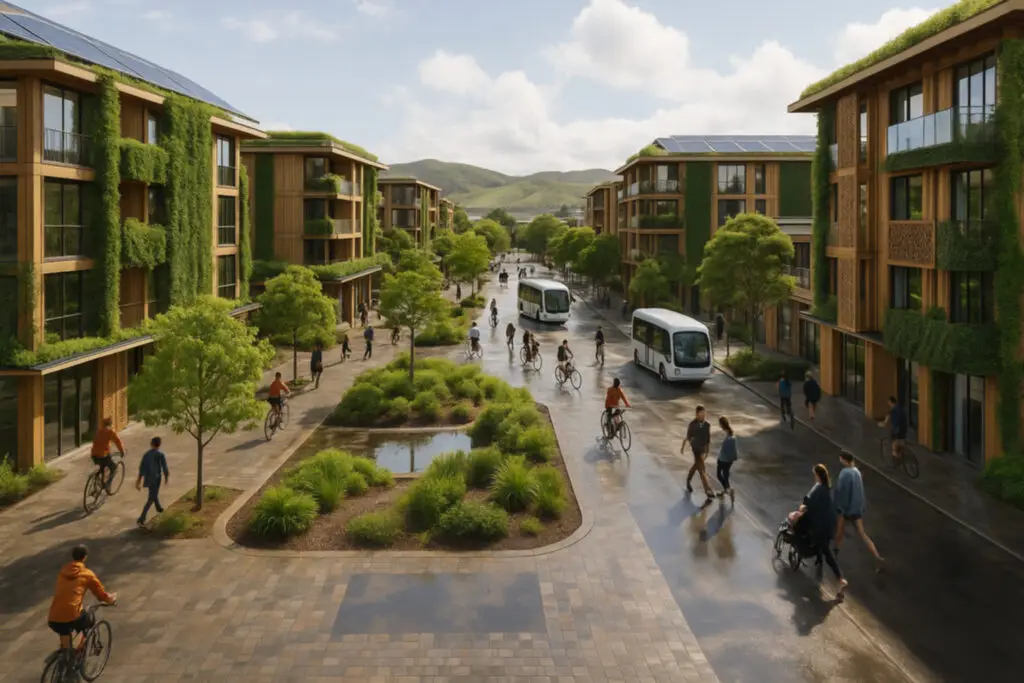
Technical Review – Better, Healthier Cities & Communities
Today, Better Cities Healthier Communities Tech increasingly defines best practice in Western urban planning. In particular, the phrase encapsulates a measurable and actionable goal: to align land use, mobility, and public space policies with key indicators of population health, social equity, and environmental sustainability. As a result, it serves not only as a planning framework but also as a performance benchmark across sectors.
Health Promoting Infrastructure
Cities increasingly treat transport corridors, parks, and housing codes as public health interventions. The World Health Organization urges “connected, compact neighborhoods” that invite walking and cycling while guaranteeing access to nature and transit WHO. Evidence shows effective design saves lives. For example, cycling culture in the Netherlands prevents an estimated 6 400 deaths yearly and adds six months to average life expectancy C40 Cities.
- Protected bike lanes reduce crash risk and pollution exposure.
- Pocket parks and street trees cool heat islands and improve air quality.
- Well ventilated, affordable housing cuts respiratory illness.
Barcelona’s Super blocks illustrate impact. Traffic calming lowered nitrogen dioxide by 25 % and fine particulates by 17 %, while resident surveys record better sleep and more social interaction.
Inclusive and Cultural Design Better Healthier Cities & Communities
Infrastructure alone cannot guarantee livability. Vienna’s gender responsive planning shows why social space analysis matters: brighter lighting, wider sidewalks, and plentiful benches encourage safe use by women, children, and older adults. Mixed income housing and community plazas foster routine encounters among neighbors, strengthening trust and cohesion. The World Health Organization frames this as a “right to health” within urban environments, urging socially inclusive places for all abilities and ages.
Successful strategies share three traits:
- Early engagement of under represented groups through workshops and digital surveys.
- Iterative co design, allowing residents to test pilot spaces before full roll out.
- Transparent monitoring via public dashboards to track health and equity metrics.
Governance, Funding, and Metrics
Better, Healthier Cities & Communities
Delivering healthier cities, first and foremost, requires cross sector governance. Accordingly, many municipalities now apply a “Health in All Policies” filter. For example, urban planners increasingly consult with epidemiologists, while transport agencies form partnerships with environmental justice NGOs. Furthermore, zoning reform plays a pivotal role. Notably, Minneapolis’s 2020 decision to eliminate single family only zones seeks to expand housing supply and, at the same time, address long standing structural inequities.
In parallel, financing mechanisms have evolved. Public private partnerships now help fund major transit lines. Meanwhile, participatory budgeting processes are used to allocate local improvement funds more democratically. Additionally, global philanthropies have stepped in to support pilot initiatives, enabling innovation at lower risk to local governments.
Moreover, digital tools are enhancing transparency and accountability. For instance, live dashboards such as the Australian Urban Observatory’s index map real time access to parks, transit, and urban amenities. In addition, digital twins enable planners to simulate flood defenses or tram routes before breaking ground, thereby reducing implementation risk and improving community communication. Emerging technologies such as artificial intelligence also contribute: by summarizing thousands of citizen comments into concise, actionable insights, these platforms accelerate inclusive decision-making while upholding democratic principles.
Next Steps
Western case studies increasingly show that when public health, inclusion, and evidence based governance are prioritized, cities achieve tangible improvements in air quality, safety, and social cohesion. Therefore, practitioners should aim to integrate health metrics into zoning frameworks, consistently fund active mobility networks, and crucially embed citizen co design throughout every phase of the planning and implementation process.
Technical
Better Healthier Cities & Communities Tech
Technical Review – Better, Healthier Cities & Communities Today, Better Cities Healthier Communities Tech increasingly defines best practice in Western urban planning. In particular, the
Green Rooftops Gardens Tech
Technical assessment of Green living Rooftops Gardens in Australia and New Zealand, 2023-2025 Green Rooftops Gardens Tech have shifted from experimental showcases to mainstream infrastructure

Walls Vertical Gardens Tech
Living Walls Vertical Gardens – a Technical Synthesis for Australasian Cities In short Walls Vertical Gardens Tech integrate also vegetation, substrate, and irrigation into building
Q1. How can AU/NZ councils finance Super Block pilots more strategically?
A1. To begin with, councils can blend Health in All Policies levies with existing state cycling grants. Additionally, by incorporating participatory budgeting, they can fund incremental street transformations while ensuring community input and fiscal transparency.
Q2. Which datasets can be used to verify public health gains from urban design changes?
A2. In order to correlate design interventions with health outcomes, it is essential to track key indicators. These include AQI (Air Quality Index), asthma hospitalizations, walk ability scores, and tree canopy coverage. Ideally, these datasets should be compiled in an open dashboard to support ongoing evaluation and public accountability.
Q3. What design standards apply to inclusive streets in Australia and New Zealand?
A3. For comprehensive guidance, refer first to the Austroads Guide to Road Design 2025. In addition, the NZTA Cycle Network Guidance provides specific thresholds for lane dimensions, lighting, and accessibility. Together, these standards offer a cohesive framework for safe and inclusive street design.
Read More:
Better Cities Healthier Communities >>>
Better Healthier Cities & Communities FAQ >>>
Green Infrastructure Tech >>>
Policy Funding Levers Analysis >>>
Net-Zero Precinct Programs Dashboard >>>