Thermal Comfort in Winter: what warmer months can hide
Thermal comfort in winter is a practical way to see how a New Zealand building really performs. A room that seemed acceptable in March may feel difficult in June. A clinic waiting area may be warm near the heat pump but cold at the glass. A childcare room may feel fine at adult head height but cold near the floor. A small office may keep the thermostat high while staff still complain about draughts.
That is why winter comfort evidence matters. It shows where heat is being lost, where air is moving, which rooms recover slowly, and which parts of the building feel uncomfortable even when heating is running. This is relevant to homes, rentals, childcare settings, clinics, accommodation sites, small workplaces, council facilities, and other occupied buildings.
The World Health Organization has proposed 18°C as a safe and well balanced indoor temperature for general populations in temperate or colder climates. New Zealand health sources also use 18°C, with extra care for young children, older people, and people who are ill. BRANZ’s HEEP2 winter research shows why this still matters: many occupied bedrooms in its preliminary winter 2023 sample were below 18°C at night, and many were below 16°C at some point.
Thermal comfort is more than the thermostat
Thermal comfort does not simply mean “the heater is on” or “the thermostat says 20°C”. People experience comfort through a mix of air temperature, surface temperature, air movement, humidity, clothing, activity level, and where they are sitting or working.
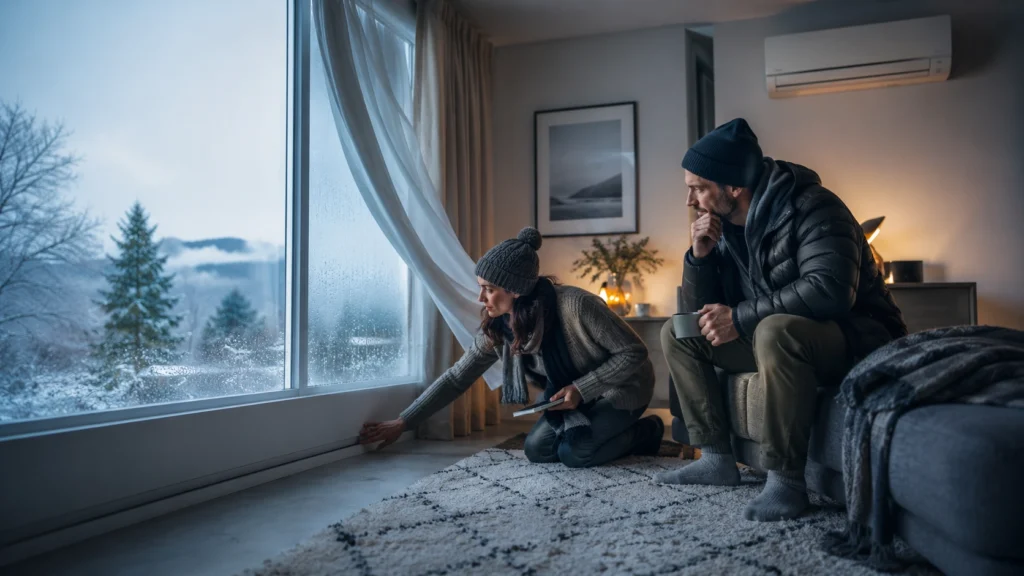
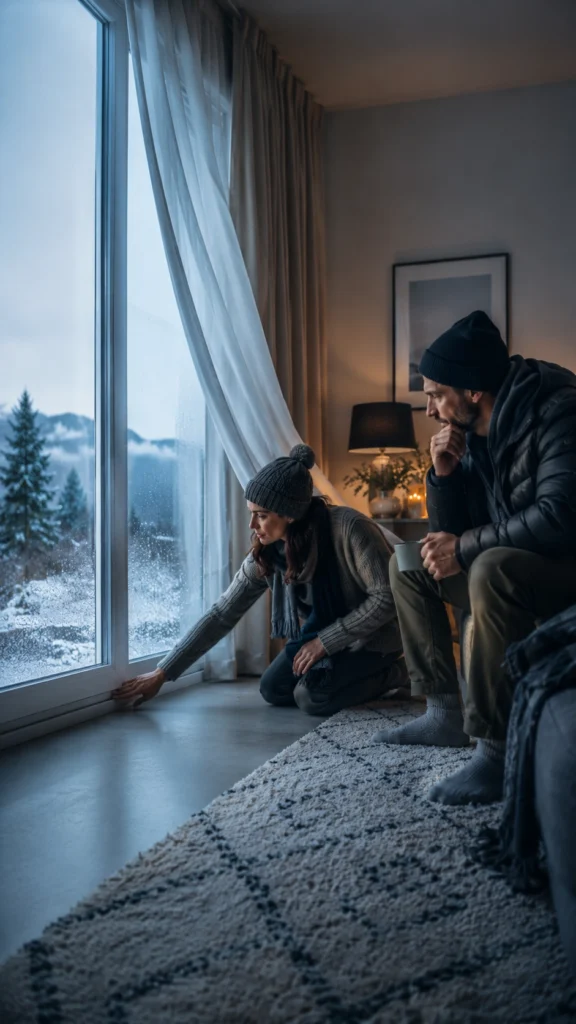
Someone beside a cold single glazed window may feel chilled even if the room thermometer reads reasonably. A person near a leaky doorway may feel a draught before the thermostat responds. Children near the floor may experience a different comfort level from adults standing nearby.
A practical winter comfort check should therefore look at the building, the room, and the occupant pattern together. The point is to understand why some spaces are not staying comfortable, and whether the first fixes should be draught control, curtains or blinds, insulation attention, heating control, maintenance, or deeper energy review.
Common signs that comfort is being lost
The most useful winter clues are often ordinary observations: a room takes a long time to warm up; the heater runs often but the space cools quickly; one side of the room is avoided; floors feel cold; curtains or blinds are thin, poorly fitted, left open after dark, or missing; windows are cold to sit near; doors have visible gaps; people use portable heaters as workarounds; guests or staff complain about one room but not another.
These clues can be mixed together. Cold glass can create discomfort beside a window. Poor curtains or blinds can increase night time heat loss. draughts can make air feel colder and push heated air out. Insulation gaps, moisture, ventilation problems, poor controls, or poor heater placement can all make comfort worse.
For rental housing, New Zealand’s healthy homes standards include minimum requirements for heating, insulation, ventilation, moisture ingress and drainage, and draught stopping. Readers wanting broader EWG context can also see the Healthy Homes page. That legal context sits separately from EWG’s role. EWG’s Thermal Comfort Check is not a compliance inspection. It is a private planning check to help owners and operators understand comfort evidence before deciding what to do next.
Why evidence should come before bigger spending
It is tempting to jump straight to a bigger heater, new glazing, full curtains, insulation work, or a refurbishment quote. Sometimes those upgrades are the right answer. But spending first can miss the real cause.
A bigger heater will not solve a major draught path. New curtains will not fix a wet sub floor. A heat pump may under perform if filters, placement, zoning, or door behavior are poor. A commercial building may spend on equipment before it has reviewed operating hours, temperature settings, door losses, or duct leaks.
Evidence helps separate low cost improvements from larger decisions. It also helps avoid asking suppliers for quotes before the problem is clear. A useful winter record may include room temperatures, time of day, weather, heating use, occupant comments, draught locations, cold surfaces, photos of gaps, and recent energy bills. For businesses and facilities, EECA also recommends reviewing bills and observing daily operations to understand energy use patterns.
What a Thermal Comfort Check helps clarify
EWG’s Thermal Comfort Check should be understood as a private first step check for heat loss, draughts, cold rooms, and practical comfort improvements before larger quotes, upgrades, or refurbishment decisions are made.
The check is private decision support for your own planning, not an official inspection or enforcement process. You receive options, not obligations.
A practical check may help clarify which rooms or zones are the main concern; whether draughts, cold surfaces, floors, blinds, curtains, insulation clues, or controls are involved; what can be improved through simple maintenance; what needs a qualified trades person, supplier, building professional, or formal assessment; and whether the issue is large enough to move into energy loss and investment planning.
EWG does not make buildings compliant, guarantee savings, replace certified audits, provide legal advice, or act as an enforcement body. The value is calmer early evidence, better questions, and more useful next step options.
When the issue needs a deeper energy or investment review
A comfort problem becomes a larger energy performance issue when the evidence points to repeated heat loss, high operating cost, weak controls, poor zoning, equipment limits, major envelope problems, or possible capital works.
At that point, readers should move to EWG’s Thermal and Operational Loss Before Technology Investment page. That page is the better place for questions about site wide energy loss, operational cost, larger upgrades, heating and cooling strategy, technology sequencing, business cases, funding pathways, and CapEx risk.
EWG’s other energy saving work may also be relevant where a site needs an energy use review, funding pathway preparation, or future site energy readiness. The comfort check should not be stretched into a full audit. It should help decide whether a deeper review is justified.
A calmer way to plan the next step
Winter can make buildings feel frustrating, but it also gives useful evidence. Instead of reacting to discomfort with rushed spending, owners and operators can observe the problem, record what is happening, test small fixes where appropriate, and then decide whether a larger review is needed.
That approach is useful for households, landlords, property managers, childcare operators, clinics, accommodation providers, small workplaces, councils, and funders.
The aim is not to create anxiety or legal exposure. It is to make winter evidence useful before money is committed. Cold rooms, draughts, cold floors, and cold surfaces are clues. A Thermal Comfort Check helps turn those clues into better options.
Sources and review note
Reviewed 26 May 2026. Sources: WHO / NCBI, EHINZ, BRANZ HEEP2, EECA winter, EECA business energy, MBIE draughts, Tenancy Services, Ministry of Education HS215, and WorkSafe.
For a Wellington Region enquiry, contact Eco Wave Green and use “Healthy Homes” for a home or rental comfort question, or “Business Energy Check” for a business site.