Equipment Strain
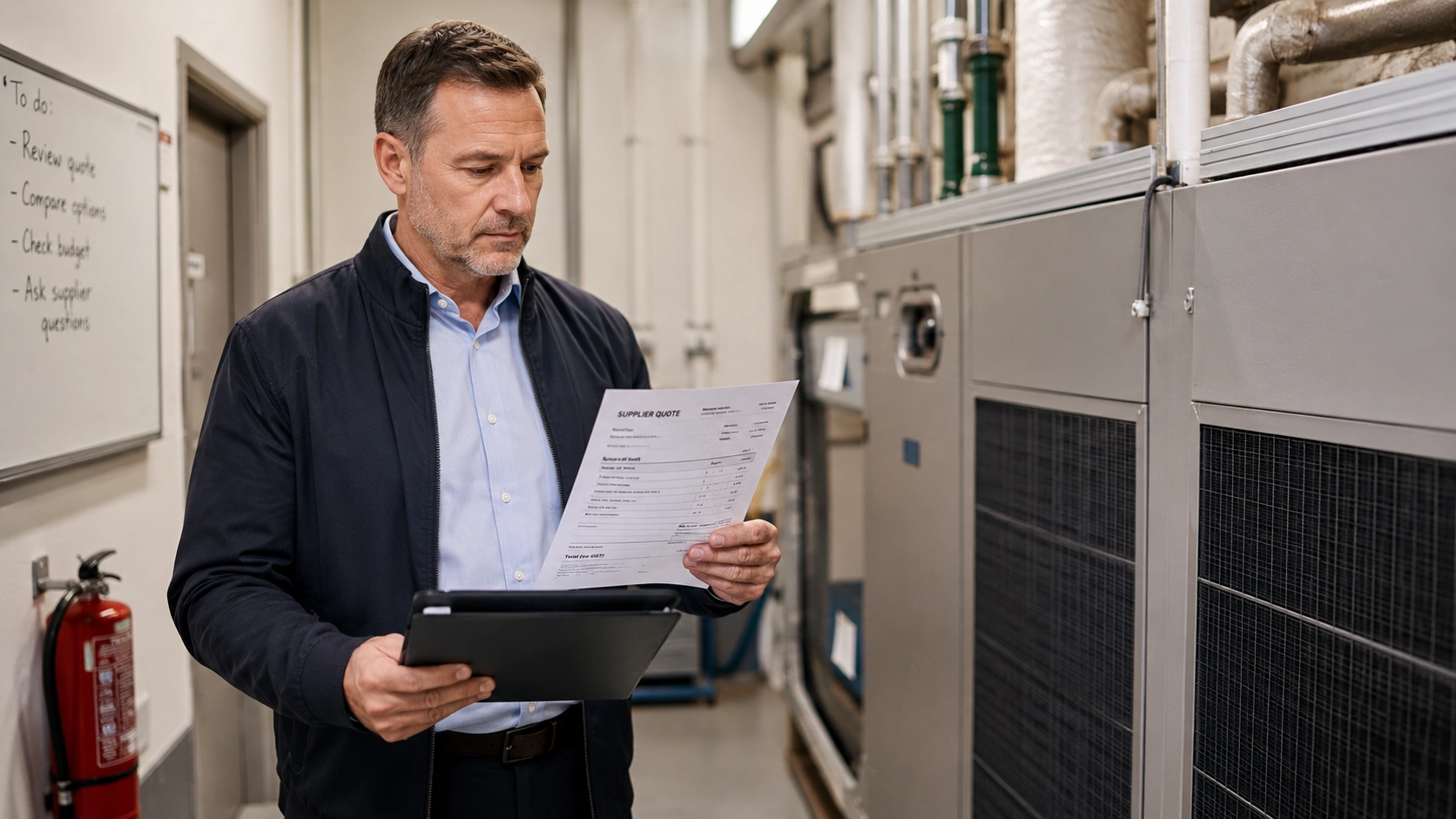
Equipment strain often appears before a clear failure. It may show up as noise, heat, slow recovery, repeated callouts, comfort complaints, staff workarounds, product-risk concern, or uncertainty about whether to repair or replace.
EWG treats equipment strain as a signal to sort carefully, not as proof that equipment is faulty or that a replacement is needed.
This page is supporting information.
It is a plain-language guide only. It is not a formal audit, design, safety instruction, or guarantee.
What this usually means
Equipment can be under pressure because it is old, poorly maintained, badly timed, overloaded, undersized, oversized, poorly controlled, affected by building conditions, or being asked to cover a routine that has changed.
Examples differ by site. A workshop may notice compressor cycling or extraction pressure. A food retailer may see refrigeration callouts or temperature concern. A gym or laundry may feel hot-water or dryer pressure. A warehouse may have lighting, charging, HVAC, or refrigeration strain. A clinic, school, hospitality site, or retailer may feel comfort or reliability issues long before there is a clear technical answer.
Common signs
Look for plain-language signals such as:
- repeated repairs or service visits;
- equipment running constantly or cycling often;
- slow hot-water recovery, slow drying, weak performance, or unusual heat;
- comfort complaints, humidity, cold spots, overheating, or stuffiness;
- alarms, temperature concern, or stock-risk pressure;
- staff overrides or workarounds;
- a supplier recommendation that feels too fast, too large, or hard to compare;
- uncertainty about repair, replacement, monitoring, or no action.
Why it matters
Equipment strain can lead to rushed decisions. A business may accept a like-for-like replacement because it feels safest, or delay action because the decision touches comfort, service, safety, product protection, compliance, landlord approval, or supplier responsibility.
The practical question is whether the strain needs a simple first-step evaluation, more evidence, a supplier or specialist route, or no action for now.
What EWG looks at first
EWG may review:
- the equipment or area involved;
- how long the issue has been visible;
- whether operating hours, loading, occupancy, trading pattern, season, or staffing changed;
- maintenance notes or recent callouts;
- photos or a supplier quote if available;
- whether the issue affects comfort, reliability, stock, service, safety, or decision timing;
- who owns, controls, maintains, and approves changes to the equipment.
EWG keeps this at a first-step level. You decide before any paid work is agreed.
What this page does not replace
This page does not replace equipment diagnosis, supplier comparison, repair advice, engineering design, installation advice, compliance review, or permission to alter settings..
If the next step needs electrical, gas, plumbing, HVAC, refrigeration, ventilation, clinical, dental, veterinary, food-safety, childcare, fire, building, machinery, pressure system, or another qualified specialist route, EWG can clarify the question, evidence, and preparation needed before you decide what to do.
A practical next step
Before replacing or ignoring strained equipment, collect the simplest useful context:
- What equipment is involved?
- What is the visible symptom?
- When does it happen?
- What has already been repaired or quoted?
- Who can approve the next step?
Then return to the main page and choose the closest category.