 Eco Wave Green
 · Interactive collection
Energy Cost & Savings
Calculators
Energy calculators for business and home. Explore energy use and running costs, try a scenario, and understand the assumptions behind the number. A useful first step towards a better energy decision.

A question is a good place to start
Explore the energy calculators
Choose “Try it here” to load one calculator in an enlarged view, or open its full page. Preview images show illustrative examples.
What each tool can tell youFor your home
How do different heating systems compare for a home?
 Preview image · select Try it here to explore
How does daily hot-water demand affect running costs?
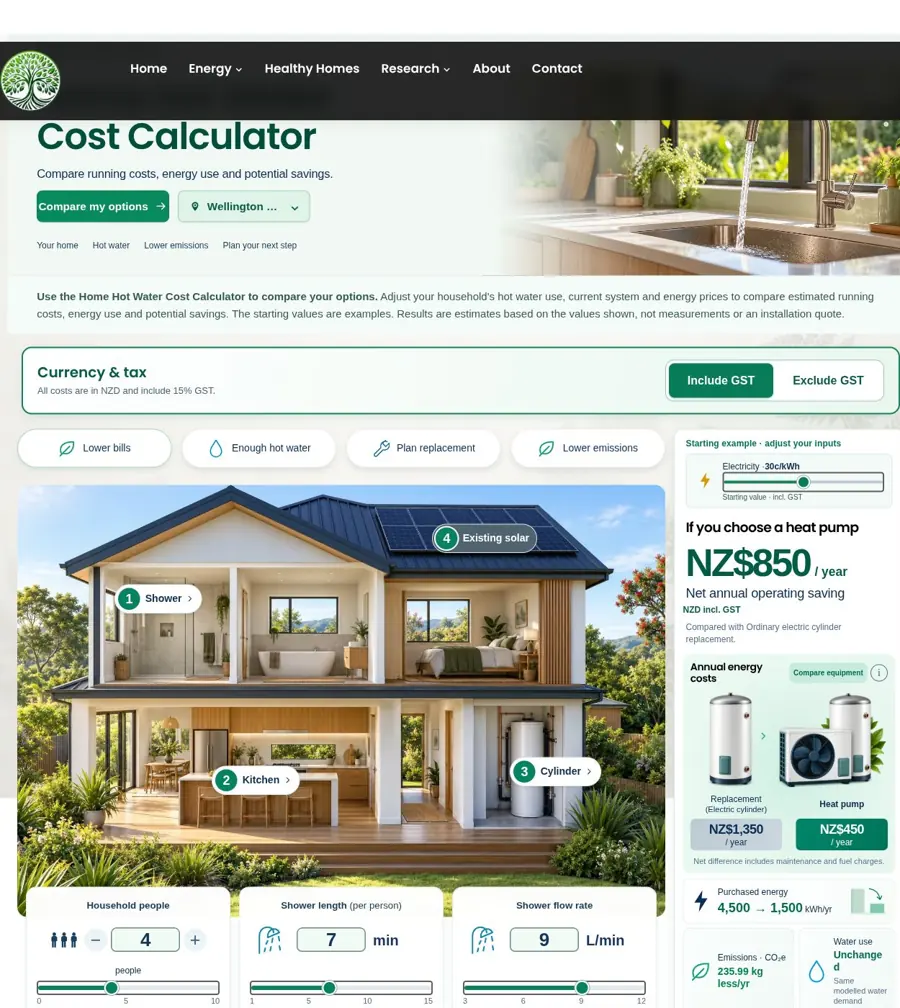 Preview image · select Try it here to explore
How do household routines affect solar use and the battery comparison?
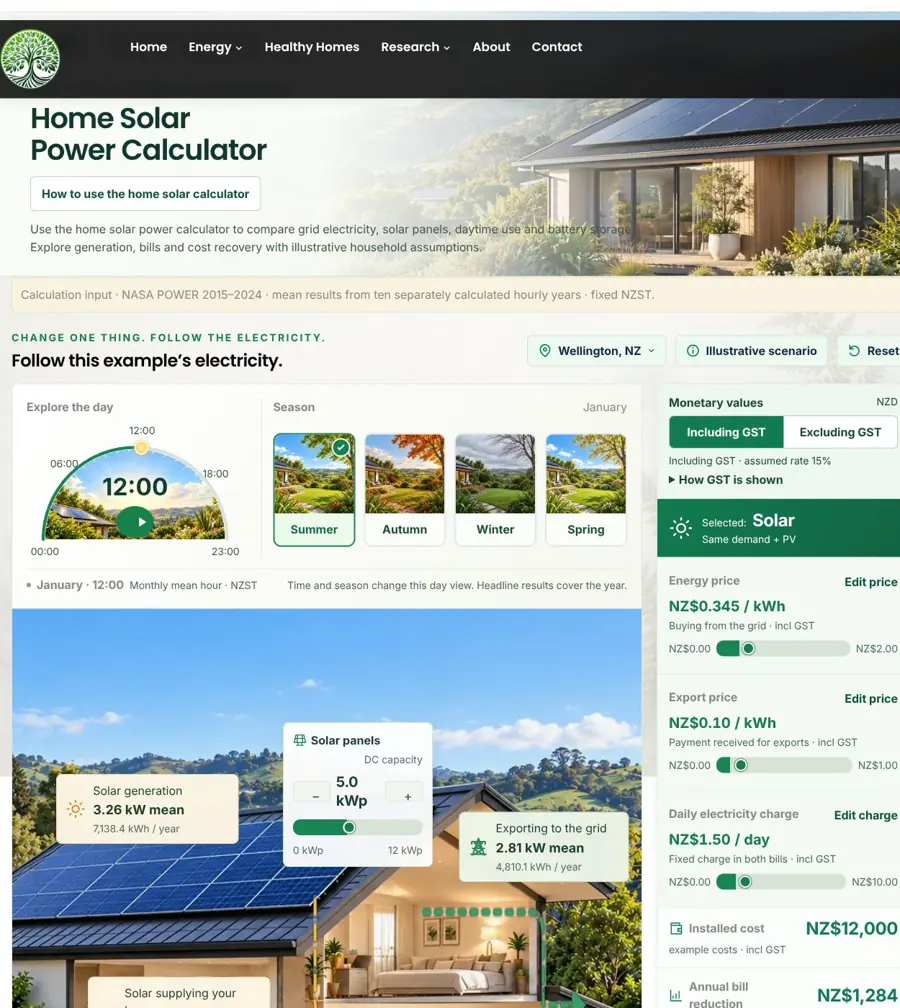 Preview image · select Try it here to explore
For your business
How do fitting power and operating hours change lighting costs?
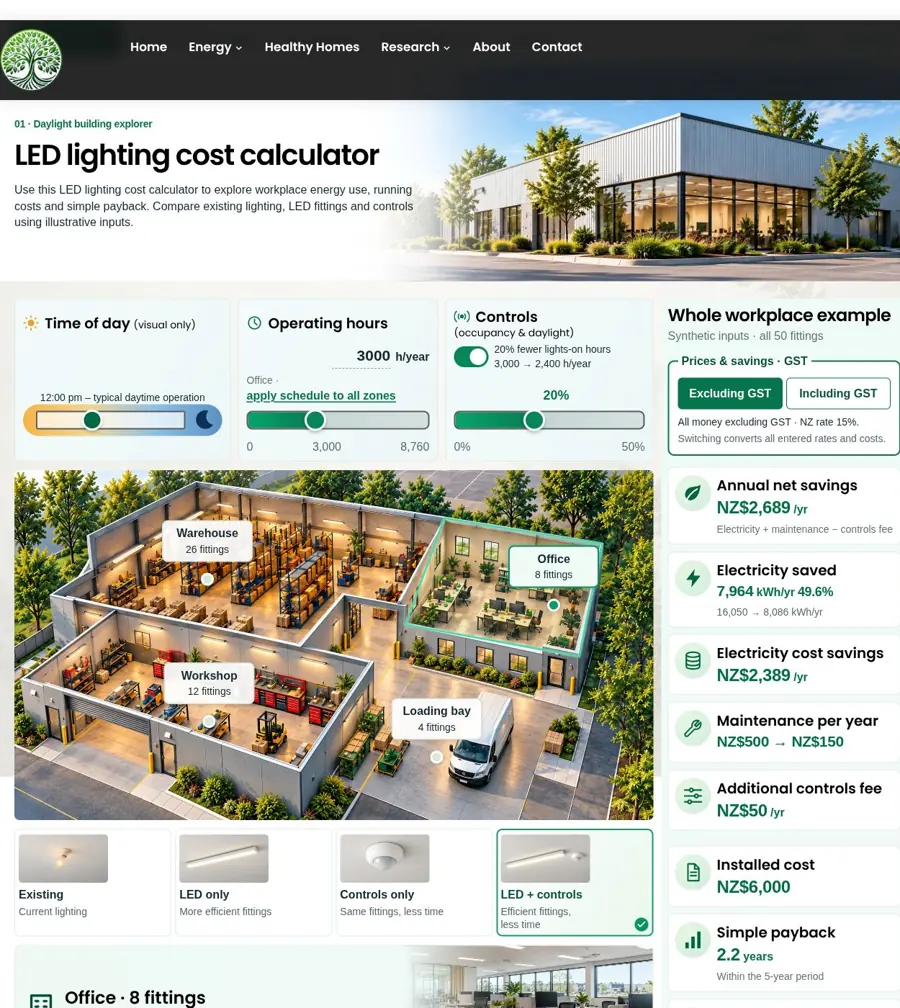 Preview image · select Try it here to explore
Refrigerating Cost Calculator and Refrigeration Cost Guide
How do repairs, controls and replacement compare at the same cooling service?
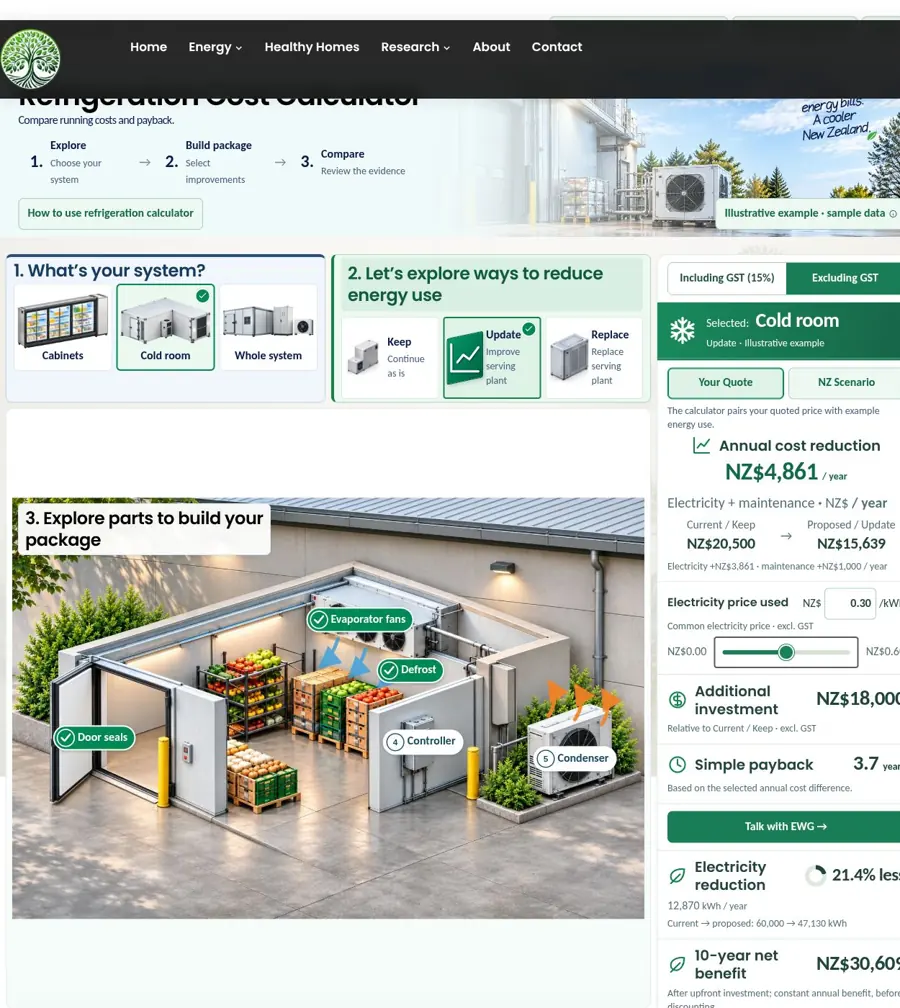 Preview image · select Try it here to explore
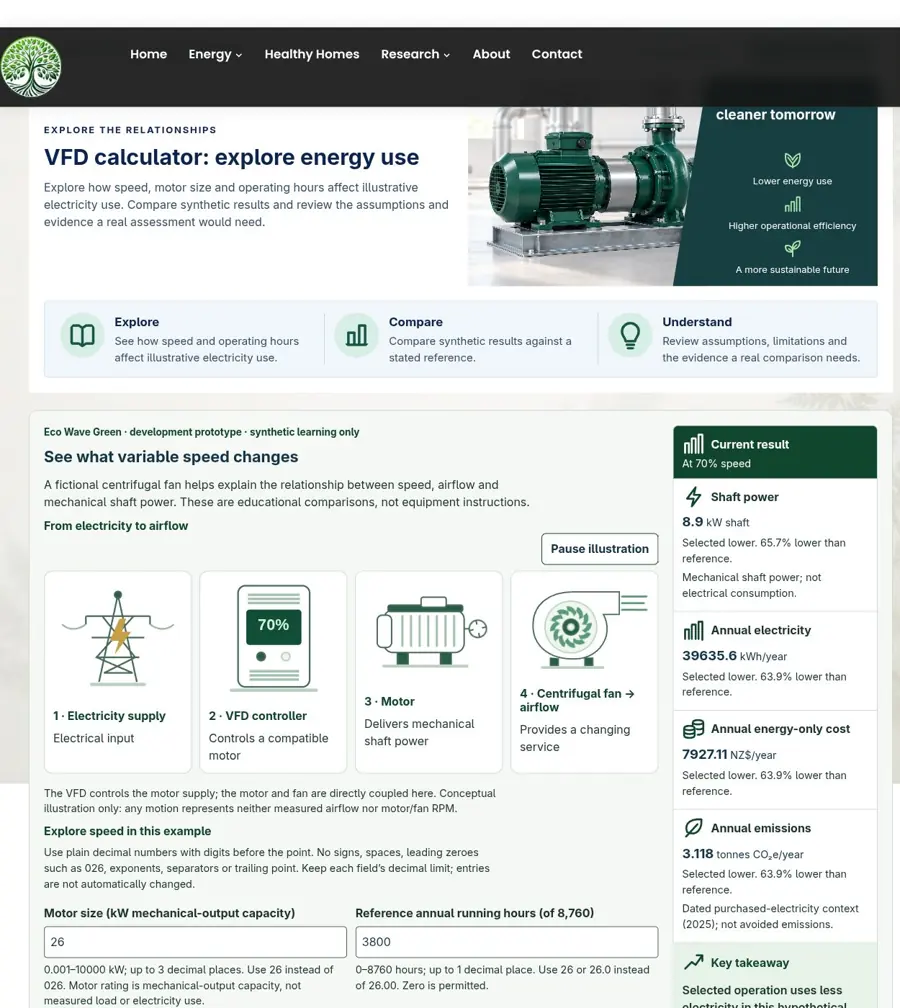
Variable Frequency Drive Calculator VFD and Variable Frequency Drive Guide VFD Explained
How does fan speed affect energy use and delivered service?
 Preview image · select Try it here to explore
How does demand timing change the value of solar electricity?
 Preview image · select Try it here to explore
Heating Cost & Calculator
How do operating patterns affect business heating costs?
Coming soon
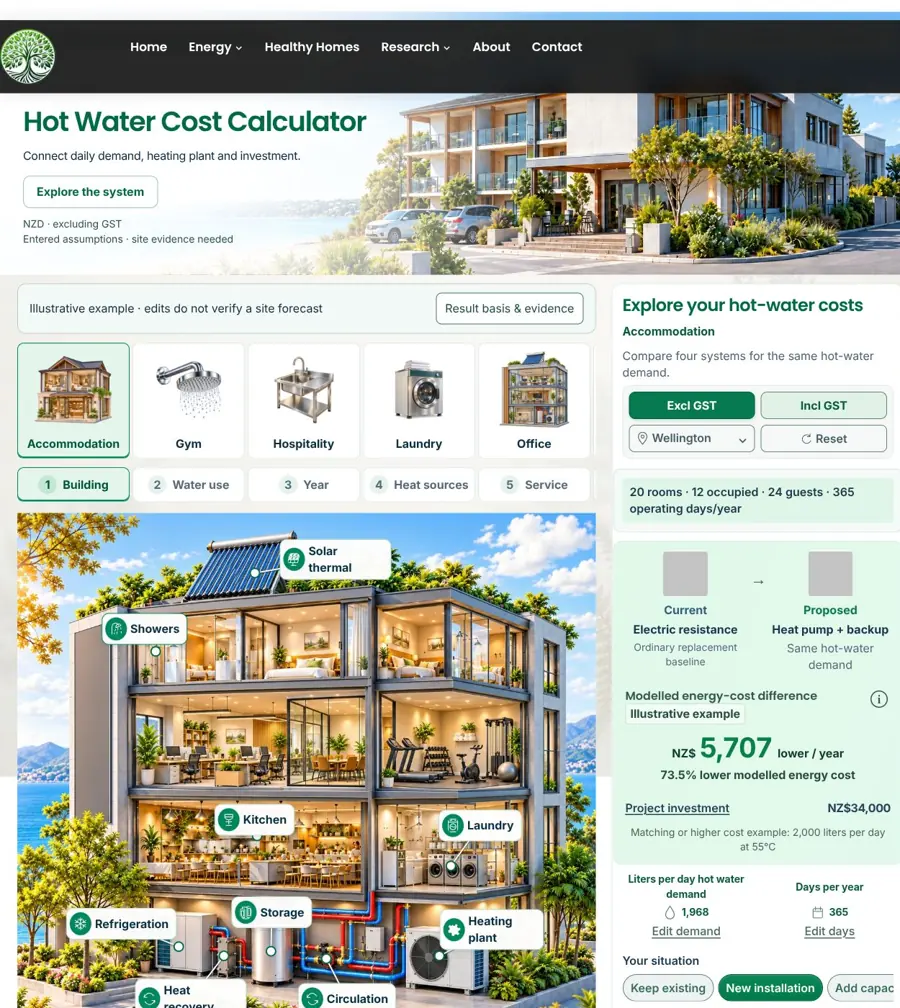
What drives commercial water-heating energy and cost?
 Preview image · select Try it here to explore
A taste of the reasoning
What an EWG assessment can clarify
Start with a specific question, explain a plausible cause, and estimate whether the consequence is worth checking. This illustrative lighting example complements the energy calculators; it is not a customer result or an offer of savings.

Could lighting after closing explain the extra electricity?
In this fictional workplace, the lights in the example use 8 kW in total. The workplace operates five days a week for 50 weeks and pays an assumed NZ$0.30/kWh excluding GST. Keeping all these lights on longer increases the workplace’s electricity use even when the fittings are unchanged.
Change one assumption
One example workplaceAll lights in this example together use 8 kW (8,000 W). For scale, that could be 100 light fittings using 80 W each.
If the total lighting load were 6–10 kW: NZ$900–1,500/year.
Workplace electricity = 8 kW total lighting load × extra hours × 250 working days.
Cost = electricity × NZ$0.30/kWh, excluding GST.
The same lights stay on for the extra hours. No installation or investment is assumed.
Read the example finding
For this one workplace, two extra hours per working day would add about 4,000 kWh and NZ$1,200 in variable electricity cost per year under these assumptions.
Next worthwhile check: compare the lighting schedule with actual closing times and confirm the whole-fitting electrical load. Check security, cleaning and safe access requirements before proposing any schedule change.
What is uncertain?
The workplace’s total lighting load and extra hours are assumptions. A combined load of 6–10 kW would produce the range shown alongside. That range tests only load uncertainty; it is not a confidence interval. Fixed charges, demand charges and tariff timing are excluded. The calculation does not establish avoidable waste.
What each tool can tell you
Choose one of the energy calculators below to see what it can tell you. Each calculator has its own assumptions and boundaries. Home and Business identify the intended audience. An assessment is a separate, agreed service.
Use these energy calculators to try one assumption at a time. Compare the same useful service where appropriate, and note uncertain inputs before interpreting a result. The VFD Guide explains the system and its limits. For wider practical guidance, see EECA’s energy-saving guidance.

Heating Home Calculator
Compare gas, direct-electric and heat-pump scenarios using building assumptions or entered example figures. Check tariffs and seasonal performance. Preserve health, comfort and ventilation. Include hot water separately when selected, rather than assuming a space-heating heat pump supplies it.
Hot Water Home Calculator
Compare water heating using a water quantity or an entered energy figure. Review purchased energy on a common service basis. Performance, losses, prices and retained gas charges affect costs. Unknown inputs should remain visible rather than being presented as measured facts. Model temperatures are calculation references; maintain safe storage temperatures and scald protection.
Solar Power Home Calculator
Explore household solar use, daylight demand and the additional battery comparison. See how changing when electricity is used affects direct solar use and grid imports. Roof allowance, solar yield, tariffs and costs depend on the chosen assumptions. The calculator does not establish installation suitability or backup capability.
LED Lighting Business Calculator
Compare a group of existing fittings with a theoretical LED alternative. Whole-fitting watts, light output and operating hours matter. Equal lumens alone do not establish suitable illumination, glare control or compatibility. Include drivers and ballasts consistently.
Refrigeration Businesses Calculator
Compare the existing system with repair and tuning, controls and timing, or replacement scenarios. Separate electricity, maintenance, repairs and capital costs while keeping cooling service comparable. The assumed changes do not predict equipment savings. Preserve food safety and reliable operation; refrigerant and lifecycle impacts need separate evidence.
VFD Business Calculator
Explore an idealised centrifugal fan. Speed changes airflow, pressure and shaft power, while electrical losses also matter. Compare annual electricity against the stated reference; estimates depend on the assumed operating hours and speed pattern. A selected speed does not establish year-round operation or equipment suitability. A motor rating describes mechanical-output capacity, not measured electrical input.
Solar Power Business Calculator
Explore a fictional business scenario with demand timing, grid imports, exports and optional storage. Annual demand, generation yield, roof allowance and prices shape the estimate. The illustration does not establish roof suitability, connection approval or backup capability.
Heating Business Calculator
Compare gas, direct-electric and heat-pump heating for an example commercial building. Inspect operating patterns, seasonal performance and tariffs. Hot water is a separate service. These estimates do not size equipment or establish that every occupied space will be adequately heated.
Hot Water Business Calculator
Explore commercial water demand, existing energy and alternative heating systems. Standing and circulation losses, operating days and conversion performance matter. Compare the same useful heat where appropriate. Model temperatures are calculation references, not instructions to change hygiene or scald protection.
How these tools help
Four ways to support a better decision
Understand your energy use
When using energy calculators, start with the equipment or service and the period you want to understand. Distinguish kW of capacity from kWh consumed. Keep measured records separate from estimates, and leave unknown inputs visible.
Compare options
Hold the service, period and price basis comparable, except where a tool explicitly illustrates changing service. Change one assumption at a time and test plausible operating hours, performance and tariff inputs.
Review potential differences
Review changes in purchased energy and running costs alongside the assumptions behind them. Check units, GST and fixed charges. A lower energy figure does not automatically mean the same percentage reduction in a bill.
Plan the next step
Record the uncertainties that matter before comparing quotations or committing money. A short observation period may miss seasons or shutdowns. Gather supporting information and agree the scope of any further assessment.
From a scenario to a useful decision

A clear question.
A scoped piece of advice.
An assessment of an agreed business energy question can provide a written finding: possible causes, an estimate with key uncertainties, and the next check that could change the decision.
How an assessment works
- Define the question. Identify the cost or operating issue and the decision you need to make.
- Agree the work and fee. Establish what will be assessed, the information required and what you will receive before paid work begins.
- Review the finding. Understand the consequence and any worthwhile next investigation. Equipment selection, installation or specialist work needs its own scope.