Research & guidance · New Zealand
Indoor Environmental Quality
Look at the whole room.
Across the whole year.
Air, temperature, moisture, light and sound shape the spaces we use. The people, activities and controls in a room connect them.
This guide uses New Zealand home examples, with separate routes for rentals, workplaces and learning spaces. Start with observations, then choose help that fits the problem.

A guide to questions and next steps, not a diagnosis, building inspection or compliance assessment. These five topics organise the explanation; they are not a health score.
Begin with the room in use
Seven useful observations
Notice patterns from a safe, normally accessible position. No opening building cavities, climbing or testing equipment is needed.
- Room, activity and time. Who uses it, for what, and when? Include occupied evenings and bedrooms overnight.
- Heat and cold. Which room feels worst in winter or summer? Notice sun, cold surfaces, draughts and day–night differences.
- Visible moisture. When does condensation appear and clear? Note visible dampness, water damage or recurring mould without disturbing it.
- Air exchange. Which windows and extraction controls can actually be used? Do air conditions change as people gather?
- Activities and products. Notice cooking, smoke, vaping, new finishes or household products. Do not deliberately sniff a suspect source.
- Light at the task. Can you see comfortably? Notice reflections, glare, shadows and unwanted light during rest.
- Sound and control. What sound interrupts the activity? Can everyone reach and understand windows, blinds and equipment controls?
Temperature
Winter warmth and summer relief
Comfort involves air temperature, surrounding surfaces, air movement, humidity, clothing and activity. A thermostat cannot describe every seat in a room.
Evidence: WHO, CBE, EECA and MBIE. No universal upper-temperature health limit is proposed here.
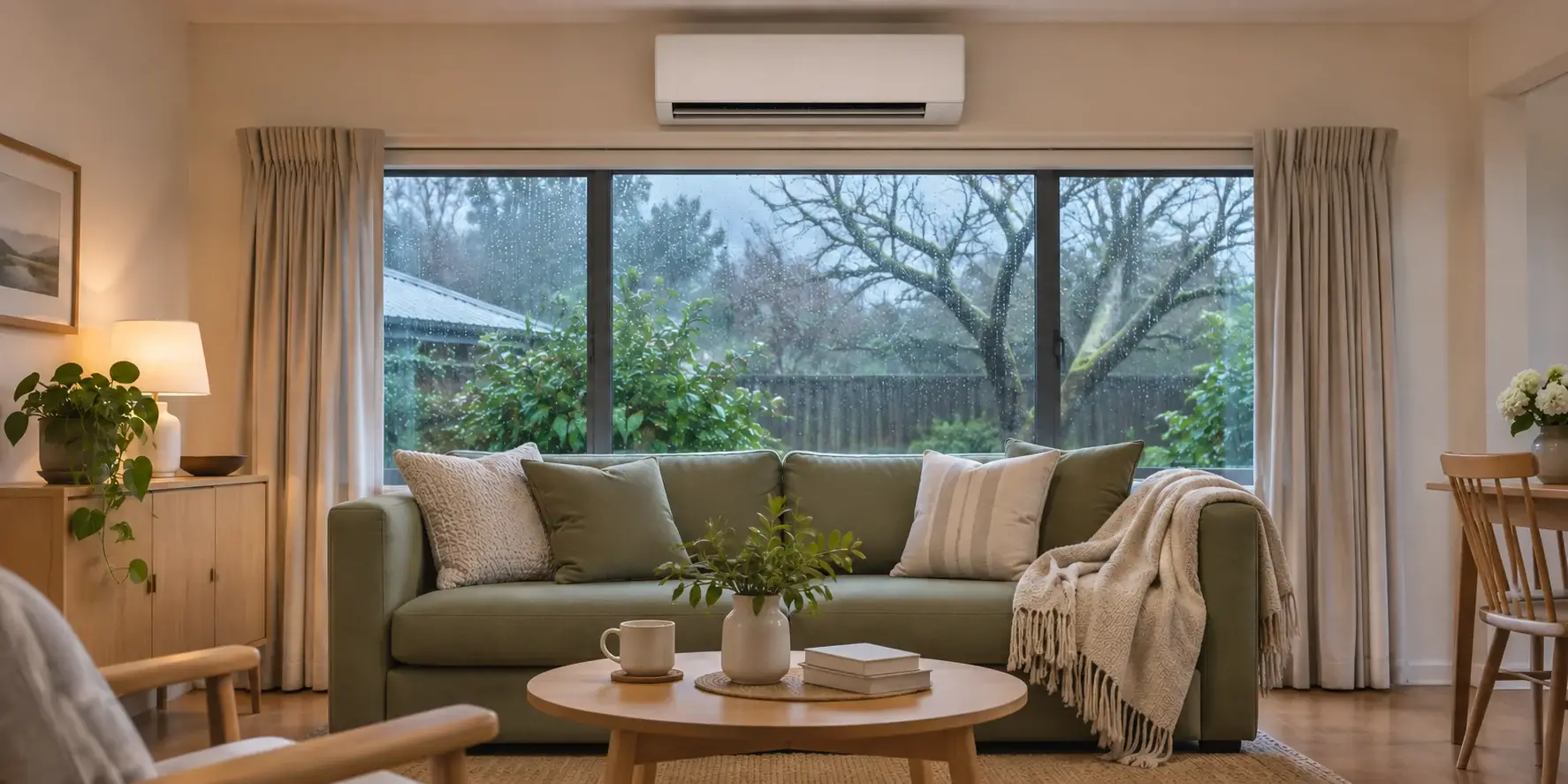
During cold weather
Cold windows, walls and floors can make a room feel chilly even while heating runs. WHO proposes 18°C as a general cold-season baseline in temperate or colder climates; some people need more warmth. This is guidance, not an individual safety verdict or rental compliance test.
Notice room-to-room variation and available heating controls. Reduce unwanted draughts while maintaining necessary ventilation. Use EWG’s Thermal Comfort Winter Check guidance for further reading.
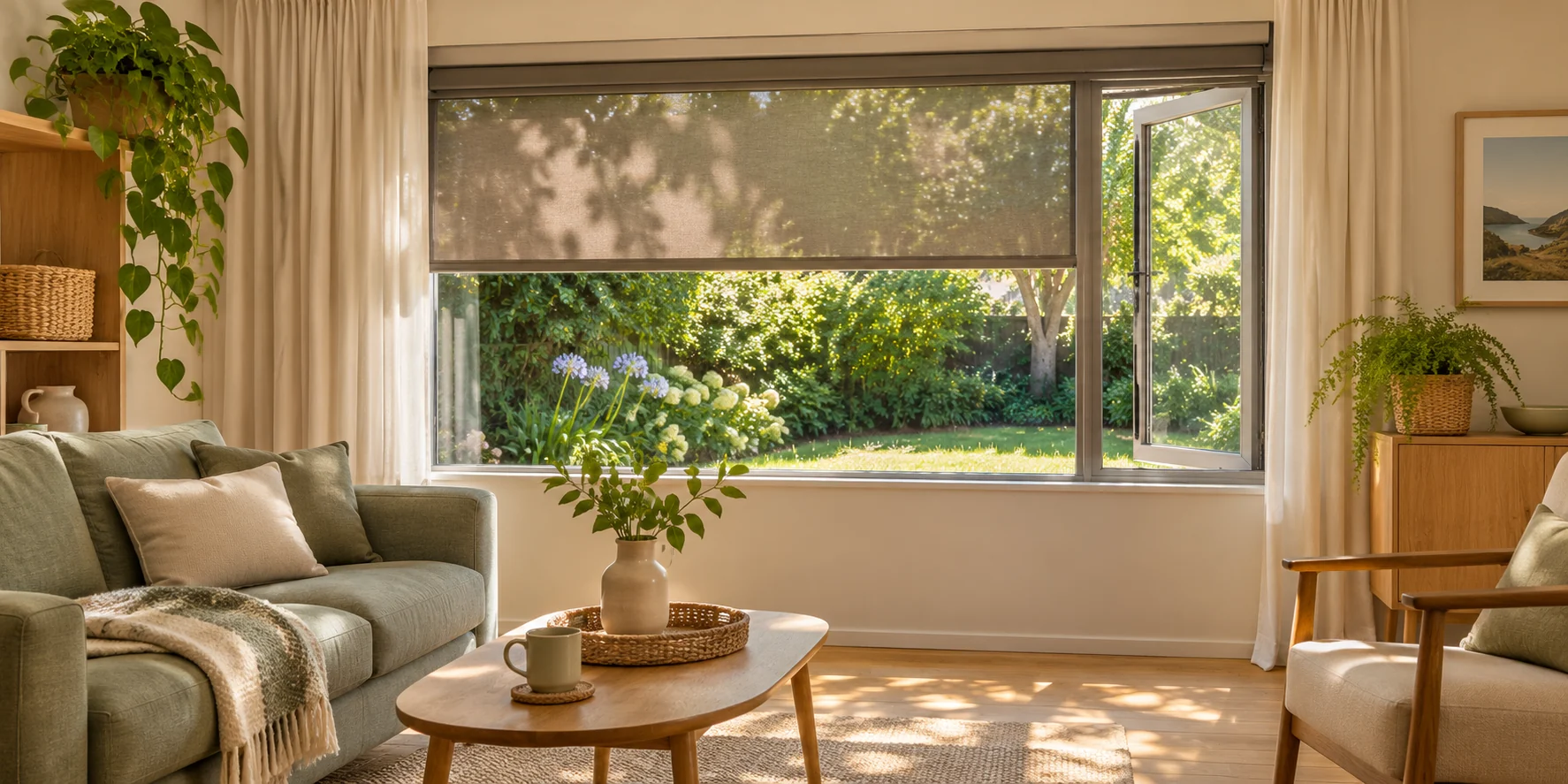
During hot weather
Look at sun exposure, shading and when outdoor air is cooler. Shading can limit heat and glare, but also affects daylight and winter sun. Daytime conditions may differ from bedrooms that stay warm overnight.
Cooling by opening windows depends on outside temperature, pollution, noise, weather, security and fall safety. A circulating room fan moves indoor air; it does not provide outdoor-air exchange. Insulation does not generate heat: consider the whole year before changing the building. Persistent overheating needs building-specific advice.
Moisture & building condition
Condensation is a clue, not a diagnosis
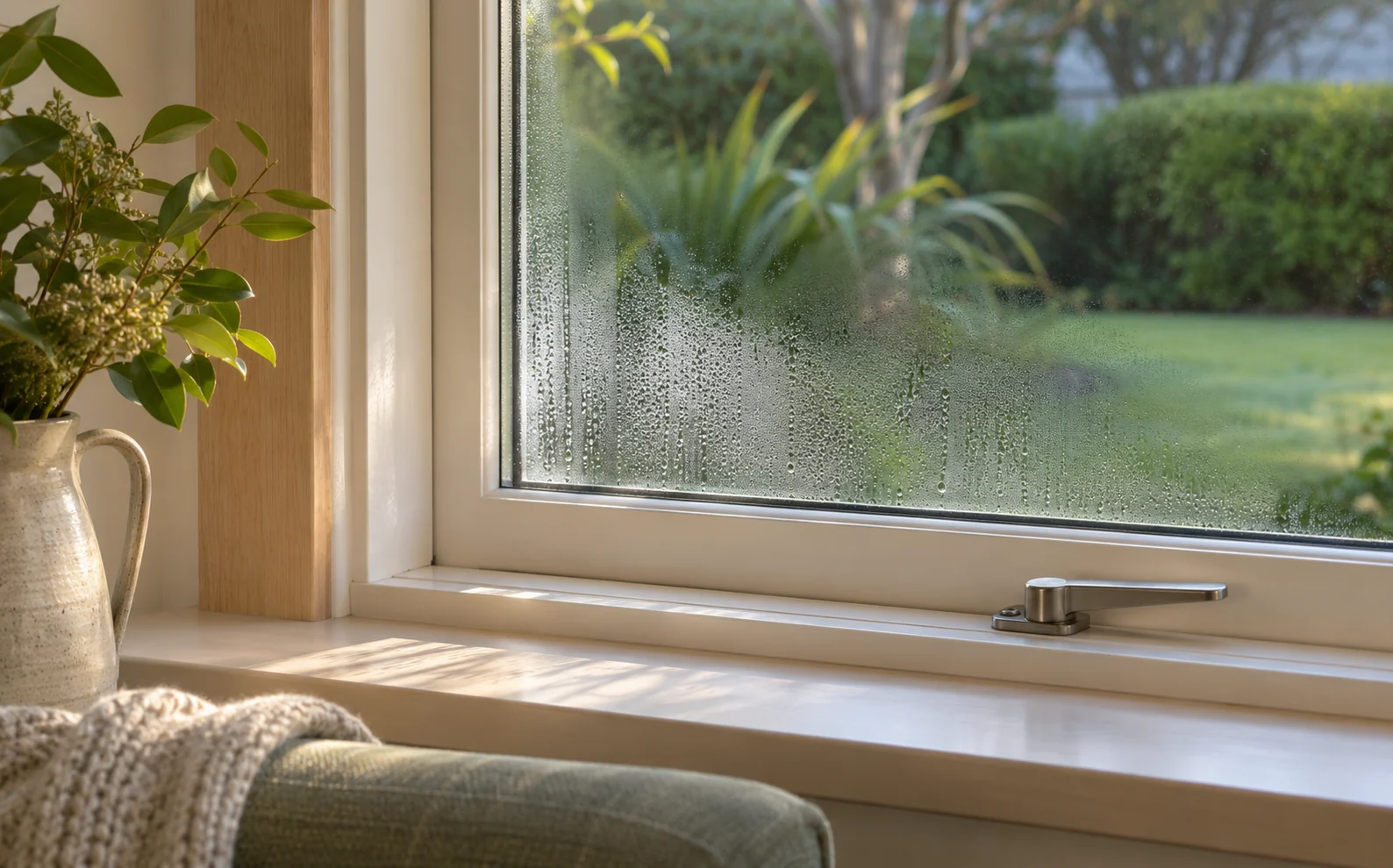
Moisture comes from people and activities, as well as leaks, ground moisture and wet building materials. Condensation forms on surfaces below the air’s dew point. A room sensor can miss a colder window or corner.
Relative humidity changes with temperature. A lower reading after heating does not by itself show that water has left the building. The absence of visible condensation does not prove that the room is satisfactory.
Reduce activity-related moisture where practical: use lids when cooking, outside-vented extraction, and suitable laundry-drying arrangements. Follow equipment instructions. Heating alone does not remove a leak or moisture source.
Persistent dampness, water damage or recurring, extensive or suspected hidden mould needs source investigation by an appropriate building or remediation professional. Do not disturb suspect materials. See US EPA mould guidance for further information, and seek health advice for symptoms.
Evidence: Level, EECA, EHINZ and WHO.
Air
Start with sources, then understand the airflow
Cooking, combustion, smoke, vaping, dampness, household products and materials can affect indoor air. A smell, or the absence of one, cannot establish safety.
Reduce avoidable pollutant sources and use ventilation with suitable outdoor air. Outside smoke and pollution can change what is appropriate; follow local official advice while also considering indoor heat. Do not block required vents or alter combustion-related ventilation yourself.
What each function does
Equipment names can conceal different designs. Check the actual specification and installed operation.
- Outdoor-air ventilation
- Purpose: exchange indoor and outdoor air.
Limit: openings, airflow paths, occupancy and outside conditions affect performance. An openable window alone proves little about overnight exchange. - Local extraction
- Purpose: remove air near cooking or moisture sources and discharge it outside.
Limit: a recirculating hood returns air to the room. Fan noise or a tissue check does not verify airflow or discharge. - Typical room heat pump or fan
- Purpose: heat, cool or move room air, depending on the equipment.
Limit: this does not establish outdoor-air supply. Actual system design matters. - Particle filtration
- Purpose: supplement source control and ventilation for selected airborne particles.
Limit: it does not supply fresh air, remove exhaled CO₂ or fix a moisture source. Gas removal is a separate capability. - Monitoring
- Purpose: reveal a pattern to investigate.
Limit: measurement does not control exposure or certify that a room is safe.
Include bedrooms overnight
A Wellington pilot monitored 20 bedrooms for two weeks each during July–October 2023, in households that self-identified their homes as damp. The research letter was published in June 2026. It supports paying attention to occupied overnight conditions, not a prevalence estimate for Wellington or all New Zealand homes. It did not establish a health benefit from an intervention. Read the study and its limits.
Materials, finishes and product information
A low-VOC label alone does not establish that a product is harmless. Ask what emissions were tested and follow product safety instructions. Natural materials can also emit substances. Consider maintenance and durability before unnecessary replacement; ventilation does not make every product or activity safe. Materials and VOC sources.
Function evidence: MBIE, Level, Ministry of Education and US EPA. Purifier selection: check room size, particle clean-air delivery rate (CADR), noise at the setting you can use, and filter maintenance. Avoid intentional ozone production. No infection-protection guarantee follows from a CO₂ reading or filter specification.
Light
Useful daylight, comfortable tasks

Judge light where the activity happens: a book, worktop, screen or route through the room. Look for glare, screen reflections, strong contrasts and shadows. More glass is not automatically better; it also affects heat, privacy and winter performance.
Consider task position, an appropriate task light and adjustable shading together. Can the user reach the blind and see its effect? At rest, notice intrusive light and whether it can be controlled.
Persistent problems may need lighting or building-design advice. Evidence on home lighting and health is varied and limited; this guide does not prescribe a medical lighting treatment, universal lux target or bulb colour.
Sound
Listen for the source and path
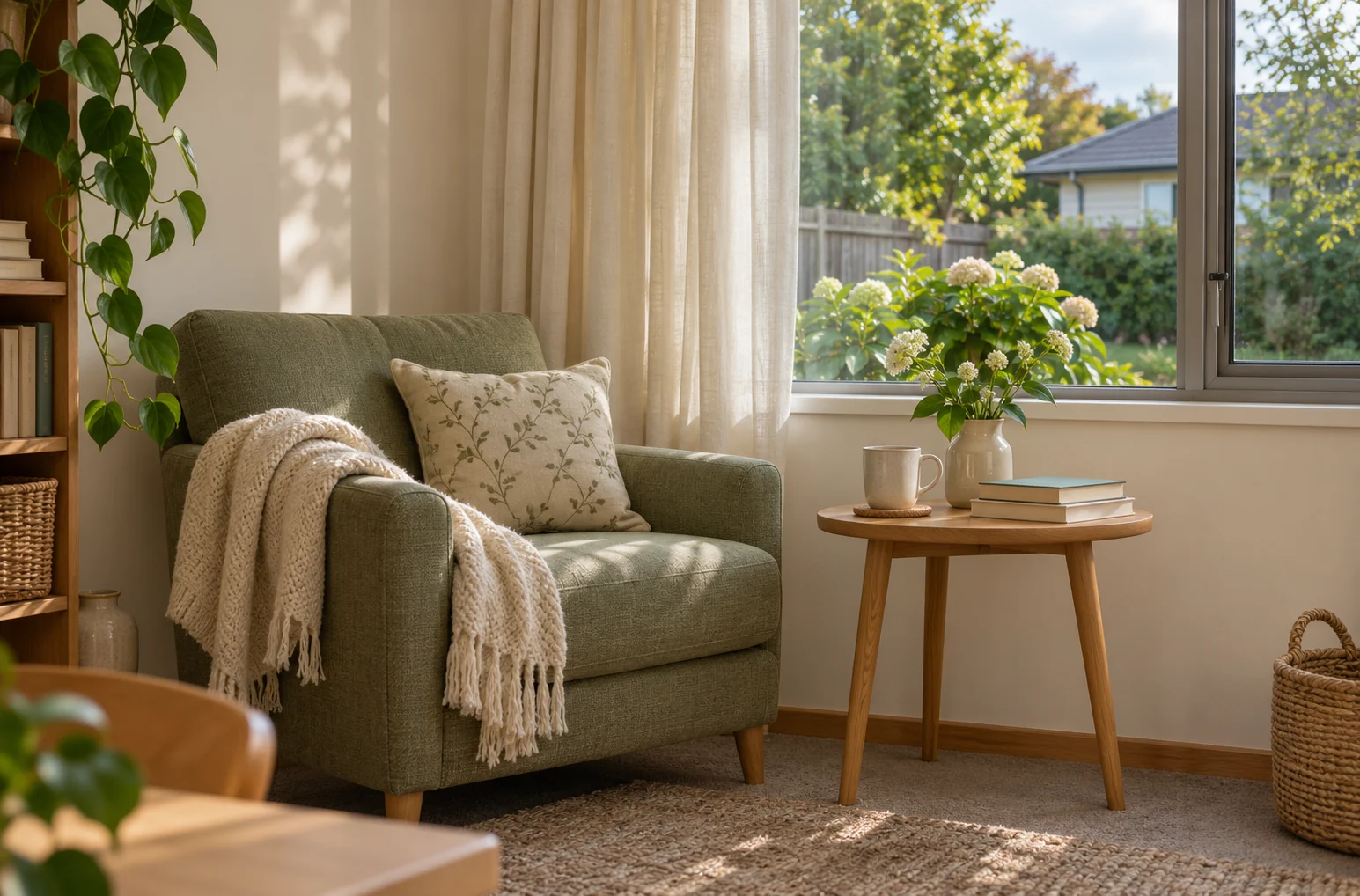
Notice the source, timing and affected activity: rest, conversation, concentration or privacy. Include traffic, neighbours and the sound of fans, heat pumps and ventilation equipment.
Sound passing through or around a wall or window differs from sound reflecting within a room. Soft furnishings may reduce reverberation without soundproofing a separating wall. Closing a window may reduce outside noise while limiting ventilation or cooling.
Consider equipment placement and quieter operation within its instructions. Persistent transmission, speech/privacy or building-separation problems need competent acoustic or building advice. A phone reading is not a compliance assessment.
Monitoring
A reading helps frame a question
Connect a measurement to the room, time, occupancy, activity, outdoor conditions and equipment settings. Keep how the room feels separate from what the instrument measures.
- Temperature & relative humidity
- Show conditions at the sensor. Placement, accuracy and colder surfaces matter; one reading does not identify a dampness cause.
- Carbon dioxide (CO₂)
- Occupied-time patterns may help investigate outdoor-air exchange. Use suitable placement and calibration. CO₂ is not an overall air-quality or infection-risk score; particle filtration can change particles without lowering it.
- Other air-monitor readings
- Cover only the variables the device measures. Display colour, price and a single spot reading do not establish accuracy or room safety.
US EPA, HSE, Ministry of Education and CDC. Workplace and education action conventions are setting-specific; they are not a universal home traffic-light scale.
Connected choices
Improve one condition without worsening another
These are illustrative planning questions, not measured EWG case studies or instructions for a particular building.
Consider repair, maintenance, source reduction and usable controls before buying or replacing equipment. Review the whole-year effect, material waste and energy use while protecting health. A building limitation is not an occupant’s fault. Integrated housing and specialist sources.
- Reduce draughts
- May improve temperature control. Maintain necessary ventilation; get professional advice on combustion-related needs.
- Open a window
- May release heat or exchange air. Check outside pollution and temperature, sound, weather, security, fall safety and whether the control is usable.
- Add shading
- May reduce heat and glare. Consider daylight, views, winter sun and the person operating it.
- Choose filtration or extraction
- Check the intended function, installed capacity, noise, energy use and maintenance. A quieter setting may change performance; filtration leaves ventilation needs.
- Alter a wall, window or ceiling
- Consider moisture, structure, fire and acoustic separations together. Suspected asbestos or lead paint requires specialist planning before disturbance.
Appropriate next steps
Choose help for the setting
For a general EWG enquiry, contact Eco Wave Green. Keep the initial question general; do not send medical records, personal photos or private documents. This guide does not establish a Home assessment service, price or certification.
- At home
- Use qualified help for leaks, building defects, extraction or heating installation, electrical work and persistent dampness. For more general reading, see Healthy Living at Home. Health concerns belong with a health professional.
- In a rental
- Raise maintenance concerns with the landlord or property manager and use Tenancy Services’ Healthy Homes guidance. Minimum standards include heating, insulation, ventilation, moisture ingress/drainage and draught stopping. Bedrooms have ventilation requirements; actual overnight conditions still matter. EWG background: Healthy Homes NZ and NZ Healthy Homes standards guidance.
- At work
- Raise concerns with the building operator and workplace health and safety route; work-generated contaminants need appropriate assessment. Use WorkSafe’s workplace and facilities guidance. For a business site: EWG Business Energy Check is a separate service link.
- In a learning space
- Use the setting’s manager and building/health and safety process. The Ministry of Education’s early-learning ventilation guidance provides a setting-specific route; home observations do not replace its responsibilities.
Indoor environmental quality Q&A
Common questions
Can the same room be cold in winter and overheat in summer?
Yes. Solar exposure, shading, heat loss, ventilation, equipment and how the room is used affect different seasons and times of day. Assess the whole year; insulation does not generate heat.
Does a room heat pump provide fresh air?
A typical room heat pump recirculates room air to heat or cool it. That does not establish an outdoor-air supply. Check the actual system design and ventilation arrangements.
Is a CO₂ monitor a carbon monoxide alarm?
No. CO₂ and carbon monoxide (CO) are different gases. An ordinary air-quality monitor is not a substitute for an appropriate CO or smoke alarm or urgent help for a suspected hazard.
Can a particle purifier replace ventilation or moisture repair?
No. Particle filtration can supplement source control and ventilation. It does not supply fresh air, remove exhaled CO₂ or fix a leak or moisture source. Check room capacity, usable noise level and filter maintenance.
Can shading or a closed window create another problem?
Yes. Shading changes daylight and winter sun as well as heat and glare. Closing a window can reduce outside sound while limiting ventilation or cooling. Consider the conditions together and whether controls are usable.
Is IEQ the same as Healthy Homes compliance?
No. Minimum rental standards and lived conditions overlap, but IEQ also considers light, sound, room use and changing conditions. Use Tenancy Services for the applicable rental rules; this guide cannot determine compliance.
Does a low-VOC label mean a product is harmless?
No. A label alone does not establish harmlessness. Ask what emissions were tested, follow product safety instructions and consider other indoor sources and ventilation.
Do houseplants solve indoor air-quality problems?
No. The US EPA finds no evidence that an ordinary number of houseplants removes significant pollutant quantities in homes or offices. Plants do not replace source control, ventilation or filtration.
What about radon in New Zealand?
PHF Science describes continuing research in New Zealand homes and workplaces. It does not establish this building’s exposure or a national household-risk estimate. Use specialist information rather than inferring risk from this guide.
Sources behind this guide
Evidence & further reading
Research reviewed 22 November 2026. Sources support general explanations, not an assessment of your building. International guidance is not presented as New Zealand law.
- Whole-room scope: CDC/NIOSH — Office environments (office context).
- Temperature: WHO — Housing and health guidelines (2018); EHINZ — Home heating; CBE — Thermal comfort factors; EECA — Reduce draughts; MBIE — Resilient homes: higher temperatures (February 2025, PDF).
- Moisture: Level — Humidity and condensation; EECA — Reduce dampness; EHINZ — Indoor environment and health; WHO — Dampness and mould (2009).
- Air and equipment: MBIE — Ventilation; Level — Indoor air quality; Level — Ventilation; US EPA — Air cleaners and smoke and indoor air. Early-learning guidance is linked above.
- Overnight context: Bennett and colleagues — Stuffy nights, NZMJ, 26 June 2026. Selected 20-bedroom pilot, measurements in 2023; not a population survey. Publisher access may be limited.
- Sources and materials: MBIE — Pollution and unhealthy air; materials inside your home; US EPA on VOC labels, VOCs and product use and indoor-air controls and plants. US label context is not an NZ labelling rule.
- Light: Level — Daylighting; MBIE — Windows and controls; Osibona and colleagues — Lighting in the home and health (2021 systematic review; heterogeneous, limited evidence).
- Sound: Level — Controlling noise and basic concepts; WHO — Environmental noise.
- Measurement: US EPA — Low-cost monitors; HSE — Using CO₂ monitors (workplace context); CDC — Carbon monoxide basics. Use local help, not overseas emergency numbers or product rules.
- Integrated choices and specialist boundaries: WHO — Housing strategies; WorkSafe — Asbestos in the home; Health NZ — Lead-based paint; PHF Science — Radon research (22 May 2026).
Research limits: some official pages blocked direct retrieval. Asbestos, lead and workplace guidance was available only through publisher search extracts, so this guide uses specialist boundaries rather than procedures or legal interpretations. WHO cold-season guidance was checked through its landing page and indexed guideline text; a full PDF review was unavailable. No future-policy announcement is treated as a current requirement.
Related guides and research
Healthy Homes NZ
Healthy Homes NZ After the Deadline: 5 Checks Rental Property Owners Should Keep Current Healthy Homes NZ is now an ongoing condition, compliance, and record
NZ Healthy Homes Standards 2026
NZ Healthy Homes Standards 2026: Practical Condition, Evidence, and First Step Readiness This page gives landlords, property owners, and property managers a practical 2026 Healthy
Healthy Living Home: 6 Easy Checks for NZ Homes
Healthy Living Home Checks for a Warm Dry Home A healthy living home is warm enough to use, dry enough to maintain, fresh enough after
Healthy Homes
Healthy Homes: rental standards and everyday comfort. Start with rental standards and records, or explore warmth, moisture and air in everyday life.