Eco Wave Green · Learning examples
Explore the relationships
VFD calculator: explore energy use
Explore how speed, motor size and operating hours affect illustrative electricity use. Compare synthetic results and review the assumptions and evidence a real assessment would need.
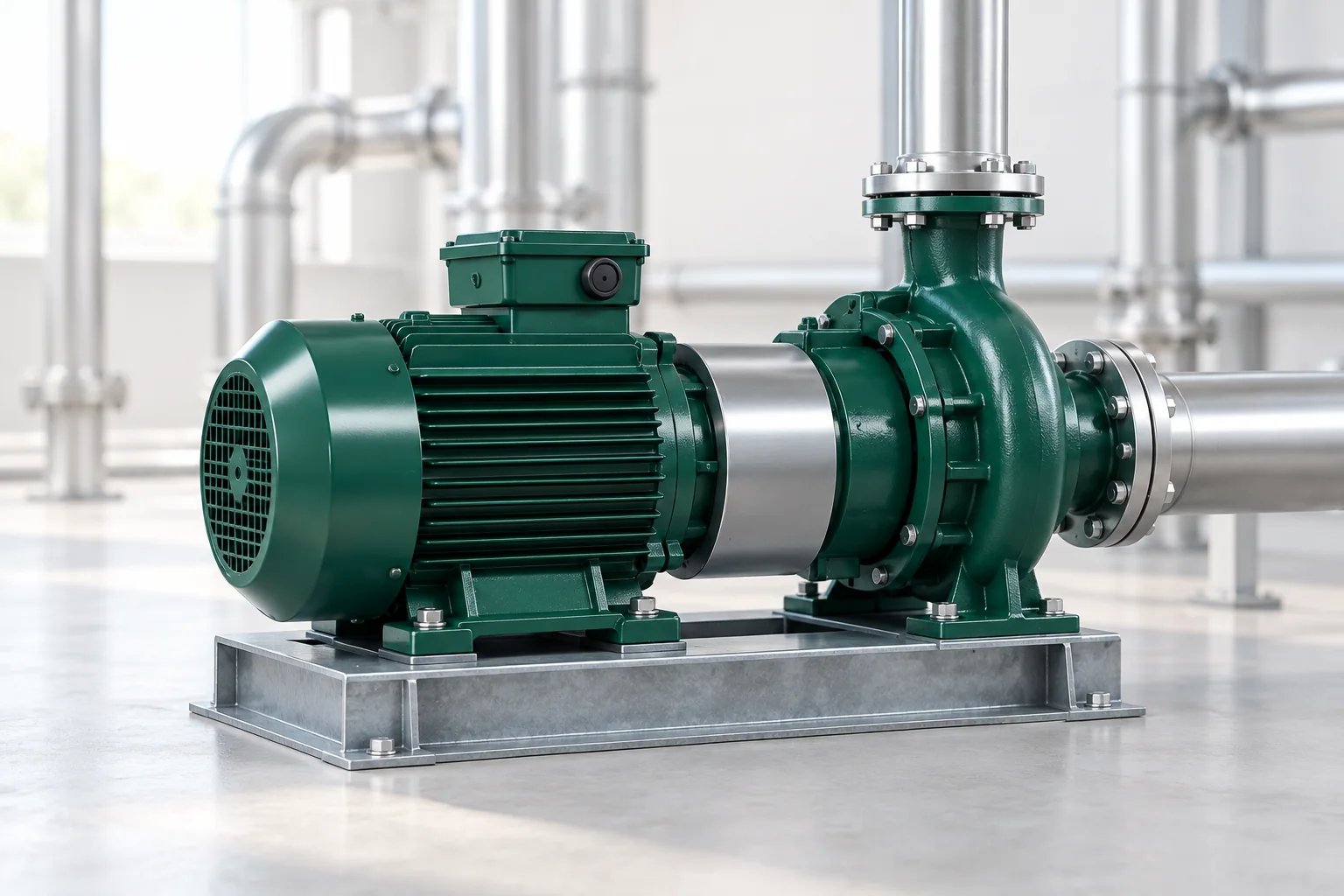
Smarter systems for a cleaner tomorrow
- Lower energy use
- Higher operational efficiency
- A more sustainable future
Explore
See how speed and operating hours affect illustrative electricity use.
Compare
Compare synthetic results against a stated reference.
Understand
Review assumptions, limitations and the evidence a real comparison needs.
Eco Wave Green · development prototype · synthetic learning only
See what variable speed changes
A fictional centrifugal fan helps explain the relationship between speed, airflow and mechanical shaft power. These are educational comparisons, not equipment instructions.
Interactive readings are unavailable until this prototype's script completes setup. The explanation and calculation limits remain useful; no annual electricity result has been calculated.
From electricity to airflow
1 · Electricity supply
Electrical input
2 · VFD controller
Controls a compatible motor
3 · Motor
Delivers mechanical shaft power
4 · Centrifugal fan → airflow
Provides a changing service
The VFD controls the motor supply; the motor and fan are directly coupled here. Conceptual illustration only: any motion represents neither measured airflow nor motor/fan RPM.
Explore speed in this example
Use plain decimal numbers with digits before the point. No signs, spaces, leading zeroes such as 026, exponents, separators or trailing point. Keep each field’s decimal limit; entries are not automatically changed.
0.001–10000 kW; up to 3 decimal places. Use 26 instead of 026. Motor rating is mechanical-output capacity, not measured load or electricity use.
0–8760 hours; up to 1 decimal place. Use 26 or 26.0 instead of 26.00. Zero is permitted.
See the idealised relationships
Whole numbers from 0–100% form an educational domain, not a safe operating range. The motor and fan are directly coupled in this fictional example.
% of each quantity’s own reference remaining
Full-speed reference · 100%Selected speed unavailable
Idealised fan example. Flow and pressure also change. These figures are not electricity-bill savings or recommended equipment settings.
Annual comparisons example
Use fictional assumptions to compare reference operation without a drive and selected operation with a drive. Delivered service changes; at positive speed both run for the same entered hours. At 0% the selected machine stays stopped for all 8,760 hours and delivers no service. This is not demonstrated retrofit savings.
The owner-selected fictional example starts at 26 kW, 3,800 hours/year and 70% speed. Quick-speed buttons retain your edited assumptions; graph views change presentation only. Clearing an input leaves it unavailable until you correct it. The emissions factor is separately identified dated source context.
Annual electricity consumption
kWh/year · Delivered service changes with speed; this is not demonstrated retrofit savings.
Annual energy-only cost
NZD/year · Fictional energy-only accounting; excludes fixed and demand charges, financing and payback.
Supporting assumptions
Loading, efficiencies and standby assumptions
Enter synthetic assumptions only. Efficiencies are explicit assumptions at each point; changing speed does not interpolate an equipment efficiency curve.
0.1–100%; up to 1 decimal place. Zero is below the allowed range.
0.01–100%; up to 2 decimal places.
0.01–100%; up to 2 decimal places. Ignored at 0% speed; required again at positive speed.
0.01–100%; up to 2 decimal places. Ignored at 0% speed; required again at positive speed.
0–10000 kW; up to 3 decimal places. Zero is permitted.
0–10000 kW; up to 3 decimal places. Zero is permitted.
A normalised 365-day, 8,760-hour year is assumed. Reference standby hours are 8,760 minus reference running hours. At positive speed selected durations match the reference; at 0% selected standby is required for all 8,760 hours. Standby already includes electrical losses. Reference standby is ignored at 8,760 reference running hours; selected standby is ignored there only at positive speed. No transmission loss, running external auxiliaries, fixed pressure or runtime compensation is modelled.
Annual electricity is unavailable until assumptions are supplied.
Optional energy-only cost
This is fictional consumption × price accounting, not a bill-saving estimate. No fixed charges, demand charges, time-of-use tariff, financing or payback.
0–1000 NZ$/kWh; up to 6 decimal places. Zero is permitted.
Optional dated emissions context
Consumption-associated purchased-electricity accounting only; not marginal avoided, network-loss, lifecycle or real-site emissions. The example includes the adopted dated factor. It is historical sourced context, not a fictional assumption or an end-user review decision.
View calculation details
With speed ratio r, idealised airflow is r, pressure is r² and mechanical shaft power is r³, each relative to its own reference. Geometry and fluid density stay unchanged; corresponding points, constant fan efficiency and a friction-only system are assumed. Real operating points and fixed pressure can change the relationship.
At 80% speed the example gives 80% airflow, 64% pressure and 51.2% shaft power. No electrical saving follows from those percentages alone.
Reference shaft kW = motor rating × load fraction. Selected shaft kW = reference shaft kW × speed ratio³. At positive speed electrical input divides shaft power by the stated motor efficiency, and by drive efficiency on the selected side. At 0% selected running input is inactive (zero); selected running efficiencies are ignored and selected annual electricity = 8,760 × complete selected standby kW. Reference calculation retains its entered running/standby durations. Annual energy for a running arrangement = its running hours × electrical kW + its standby hours × complete standby kW. Difference = reference minus selected; a negative difference means higher selected use.
When might a VFD not reduce electricity use?
At unchanged shaft duty, a drive adds conversion losses. With the adopted example loaded, move the slider to 100%: the fan provides its reference shaft duty, while selected electrical use is higher because of the assumed drive loss. Different motor efficiencies and standby inputs also affect the result. Equal, higher and unavailable outcomes remain valid.
This example does not establish eligibility for an installation. Fixed pressure, required service and real efficiency may differ. Existing-VFD optimisation, non-centrifugal or uncertain equipment, hazardous areas, fire/smoke/emergency/life-support and health, safety or process-critical applications are outside scope. Preserve ventilation, process and environmental safeguards. Obtain competent assessment before any equipment change; this prototype gives no sizing, selection, compatibility, design, installation or operating approval.
The specialist scenario workspace remains in the original calculator. This parallel local prototype supplies no guarantee of savings, funding, compliance or other outcomes.
Local learning summary
No interactive calculation is available. Annual electricity, cost and emissions are unavailable. Review the stated assumptions and scope before using any example.
Build a stronger comparison
What would support a site comparison?
A motor label and chosen frequency are not enough. A supported comparison needs matched service, representative operating hours and evidence for both electrical-power profiles.
Equipment and control
Identify the centrifugal pump or fan and how it is regulated.
Use records or operator knowledge, with competent confirmation when uncertain.
Required service
Establish required flow, pressure or ventilation, timing and protected needs through records and a competent system/process assessment.
Electrical power
Support existing and proposed electrical input at each duty on the same boundary.
A motor rating is not an operating-power measurement.
Running and standby profile
Establish representative duties, seasons, hours and non-running consumption.
Check that the profile represents the intended period.
Suitability and responsibility
Appropriately authorised, competent people establish equipment compatibility, permitted operation and electrical/process responsibilities within their respective scopes.
“Not known” is a normal evidence gap. Gather existing records; do not guess or open equipment to fill it. Establishing missing technical evidence is a separate assessment.
No drive, operating speed or supplier is selected. A competent pump/fan and process assessment is separate. Electrical work requires appropriate authorisation.
Sources and limits
M0 powers are EWG fictional teaching fixtures. M1 uses entered synthetic powers and evidence assertions, not independently verified site measurements. These sources support the explanations and qualifications; their organisations have not reviewed or endorsed this example.
- DOE — Adjustable Speed Drive Part-Load Efficiency (opens in a new tab)
- DOE — Determining Electric Motor Load and Efficiency (opens in a new tab)
- DOE / Hydraulic Institute / Europump — Variable Speed Pumping (opens in a new tab)
- DOE — Improving Fan System Performance (opens in a new tab)
- EWRB — Why use a registered electrical worker (opens in a new tab)
Source records reviewed in the research on 18 September 2026. Links have not been freshly checked for this build. Historical efficiencies are not current equipment defaults; high-level electrical referral is not a complete legal interpretation.